Wildlife & Nature · 16 December 2022
10 Strange Animals and Where to Go to See Them
For plenty of travellers, wildlife is the whole point of a trip. A glimpse of something rare, odd or downright improbable can be the memory that outlasts everything else.
10 Strange Animals and Where to Go to See Them
For plenty of travellers, wildlife is the whole point of a trip. A glimpse of something rare, odd or downright improbable can be the memory that outlasts everything else.
The creatures below are among the strangest you will find anywhere — and many of them are also barometers of fragile ecosystems. Seeking them out responsibly, with guides who know their habits and habitats, is one way tourism can help keep them around.
Here are ten of the world’s most peculiar animals, with notes on where and when to look for each.
1. Pangolin
Where to see them: Sub-Saharan Africa Family: Manidae IUCN status: Vulnerable to Critically Endangered, depending on species Habitat: Tropical forests, savannahs and grasslands Average adult weight: 2–33kg, depending on species
Pangolins look like anteaters that have been fitted with armour plating, which is why they are sometimes called scaly anteaters. Appearances deceive, though: their closest relatives are dogs, cats and seals, not anteaters or armadillos.
Beady eyes, oversized feet and a habit of rolling into a tight ball when threatened give them a certain charm. Three species occur in sub-Saharan Africa.
Intensive illegal hunting and poaching for their meat and scales have pushed many pangolin species in Africa and Asia to the brink of extinction.
When to go: The dry season (November to March) offers the best chance of sightings in Ghana’s dry or deciduous forests, where these nocturnal and diurnal animals forage actively.
2. Aye-aye
Where to see them: Madagascar Scientific name: Daubentonia madagascariensis IUCN status: Endangered Habitat: Rainforests and some tropical deciduous forests Average adult weight: 2.5–2.8kg
Madagascar is famous for wildlife found nowhere else, and the aye-aye is one of the finest examples. Bulging eyes, teeth that never stop growing and long, thin fingers give it an unsettling appearance — particularly if you meet one in the forest after dark.
A type of lemur, the aye-aye lives only in Madagascar’s jungles, emerging at night to forage.
When to go: At night on a wooded islet in Lac Ampitabe, especially during the dry season (May to November), when insects are easier to find.
3. Capybara
Where to see them: Latin America Scientific name: Hydrochoerus hydrochaeris IUCN status: Least Concern Habitat: Wetlands, rivers and flooded grasslands Average adult weight: 35–66kg
Capybaras are the largest living rodents, and they are widespread across Latin America. They live near water in social groups that can swell to around 100 individuals in the dry season.
They are often seen acting as a perch for birds, which only adds to their odd appearance.
What may surprise you is their turn of speed — they can run as fast as a horse — and their ability to stay underwater for up to five minutes to evade predators.
When to go: Early morning or late afternoon along rivers, wetlands and flooded grasslands, particularly in the dry season (roughly May or June to October or November) when water levels drop.
Argentina’s Iberá Wetlands hold an abundance of wildlife, capybaras included, and the country’s north-east is a fine place to watch them at close range in their natural habitat.
4. Armadillo Girdled Lizard
Where to see them: South Africa Scientific name: Ouroborus cataphractus IUCN status: Near Threatened Habitat: Rocky outcrops in arid regions Average adult weight: 90–120g
Endemic to South Africa’s Northern and Western Cape provinces, this lizard resembles a miniature dragon — never more so than when it rolls into a ball to defend itself, the behaviour that gave the species its name.
It is also one of the few lizards that give birth to live young, and there is some evidence that females may feed their offspring, which is rarer still.
When to go: Daytime on rocky outcrops in South Africa’s arid regions; they are most active mid-morning and late afternoon, year-round.
Namaqualand is a strong place to look, alongside Weber’s thick-toed gecko, the southern spiny agama and the rhombic skaapsteker.
5. Magnificent Frigatebird
Where to see them: Galapagos Islands Scientific name: Fregata magnificens IUCN status: Least Concern Habitat: Coastal areas and tropical oceans Average adult weight: 1–1.6kg
These birds have wingspans approaching two and a half metres and have been recorded flying as high as 2,500 metres above sea level.
They are sometimes called man-o’-war birds, thanks to their habit of harrying other birds in flight and occasionally stealing their food.
Their strangest feature is the large red sac on the male’s chest, which he inflates to attract a mate.
When to go: During the breeding season (September to May in the Galapagos), when males display their inflated throat pouches at coastal nesting sites.
North Seymour is home to abundant magnificent frigatebirds, Galapagos sea lions and blue-footed boobies.
6. Fossa
Where to see them: Madagascar Scientific name: Cryptoprocta ferox IUCN status: Vulnerable Habitat: Rainforests and dry forests Average adult weight: 5.5–8.6kg
These cat-like mammals can reach up to four feet in length. Researchers believe their closest relatives are mongooses and similar animals, despite their strong resemblance to cougars.
Fossas eat lemurs above all, and are the only carnivore on Madagascar large enough to take an adult lemur.
Long bodies, small rounded ears and short legs earn them a place on this list — though, like the pangolin, they are rather endearing.
When to go: Early morning or late afternoon in Madagascar’s Kirindy Forest during the austral spring (September and November), when wildlife tends to be more active.
7. Sloth
Where to see them: Latin America Suborder: Folivora IUCN status: Least Concern to Critically Endangered, depending on species Habitat: Tropical rainforests Average adult weight: 3–6kg
Sloths are known for their slowness, and they can be found in the trees of Panama, Brazil, Costa Rica and many other Latin American countries.
Their faces have a slightly dopey look, and from certain angles they appear to be smiling. Their slow movement stems from a slow metabolism, a consequence of a leaf-based diet, and is thought to help them avoid predators that hunt by sight.
Today’s sloths may be small and appealing, but until around 11,000 years ago their ancestors walked on the ground and were larger than modern elephants.
When to go: Late morning in tropical forests across Latin America, when they occasionally descend from the canopy to feed or defecate. Sightings are possible year-round.
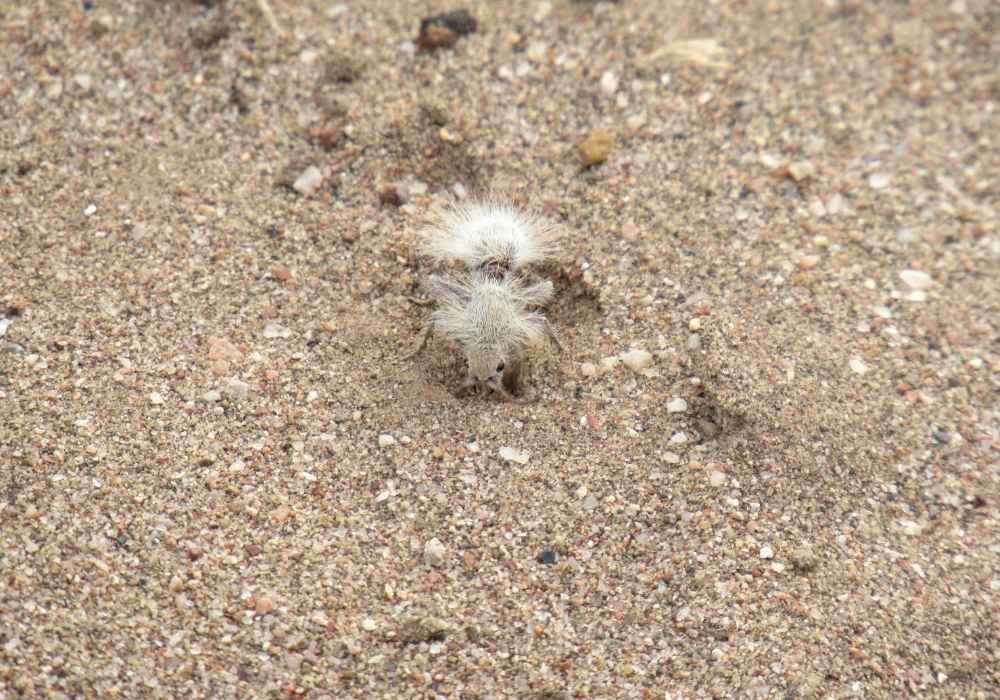
8. Velvet Ant
Where to see them: Latin America Scientific name: Euspinolia militaris IUCN status: Not Evaluated Habitat: Dry forests and desert regions Average adult weight: Around 0.03g
Confusingly, velvet ants are in fact wasps, and several different species go by the name. The females are wingless and hairy, closely resembling ants.
Some specimens in Chile have been found in black and white, which explains the alternative name panda ant.
Their sting is famously painful — strong enough to have earned them another nickname: cow killers.
When to go: The summer months (December to February) in Chile’s dry forests and desert regions; wingless females are most active in daylight, searching for hosts to parasitise.
Places such as Cajón del Maipo, near Santiago, are worth a look.
9. Pink Fairy Armadillo
Where to see them: Argentina Scientific name: Chlamyphorus truncatus IUCN status: Data Deficient Habitat: Sandy plains and scrubland Average adult weight: 90–120g
The pink fairy armadillo is a tiny creature found only in central Argentina. It is so rarely encountered that scientists have been unable to classify its conservation status. Small enough to fit in a human hand, it is nocturnal and burrows underground.
Its shyness makes it very difficult to spot, but central Argentina is the place to try.
When to go: At night on the sandy plains and scrubland of central Argentina. Sightings are rare and usually follow rainfall, when the animal forages. There is no reliable season.
10. Maned Wolf
Where to see them: Latin America Scientific name: Chrysocyon brachyurus IUCN status: Near Threatened Habitat: Grasslands, savannahs and scrub forests Average adult weight: 20–30kg
Maned wolves are not wolves at all. These long-legged animals occupy a genus of their own, Chrysocyon, and are related to wild dogs, foxes, wolves and other canids.
They are solitary, large-eared and omnivorous — unusual among hunters. Some scientists believe more than half their diet may be plant matter, which only adds to their strangeness.
When to go: Dusk or dawn on Brazil’s open savannahs and grasslands; the dry season (July to October) improves the odds of spotting them near water.
Maned wolves also occur in Argentina, Bolivia and Peru. Brazil’s Cerrado is the most dependable place to look, and the wildlife-rich Amazon and Pantanal lie within reach on the same journey.
Planning a wildlife trip
From Ghana’s rare pangolin to Argentina’s diminutive pink fairy armadillo, tracking down unusual animals is far easier with expert guides. Travelling thoughtfully improves your chances of a sighting and helps protect the habitats these species depend on.