Wildlife & Nature · 16 September 2024
African Primates: A Comprehensive Roundup of Our Top Primate Experiences
Africa's mammal fauna includes 107 primate species. Count subspecies as well, and the continent holds 192 primate taxa belonging to four families. According to the IUCN Primate Specialist Group, just over half of these —
African Primates: Where to See Our Closest Relatives in the Wild
Africa’s mammal fauna includes 107 primate species. Count subspecies as well, and the continent holds 192 primate taxa belonging to four families. According to the IUCN Primate Specialist Group, just over half of these — 52.6% — face some degree of threat from hunting and habitat loss.
Madagascar is a case apart. At roughly half the size of South Africa and just 2% of the African landmass, it supports around 106 primate species, rising to 110 taxa across five families when subspecies are included. Yet 94.5% of its primates are threatened. Elsewhere on the continent, several poorly understood monkeys are slipping quietly towards extinction.
Given this, it is little wonder that Africa’s most charismatic primates feature so prominently on wildlife travellers’ wish lists. What follows is a guide to the continent’s signature primate encounters: the great apes of equatorial Africa, Madagascar’s lemurs, and some gravely endangered monkeys of the West African rainforests.
Mountain Gorillas in Uganda and Rwanda
Few wildlife experiences in Africa match the thrill of tracking mountain gorillas (Gorilla beringei beringei) in Rwanda and Uganda.
In 2019, the International Gorilla Conservation Programme estimated that 1,063 of these critically endangered apes remained in the wild. Roughly half live in Uganda, with the rest divided between Rwanda and the DRC. Thanks to decades of intensive conservation work, the mountain gorilla is now the only great ape whose population is increasing.
Uganda
Uganda’s mountain gorillas are found mainly in the vast Bwindi Impenetrable National Park, where they can be tracked in all four sectors: Buhoma, Rushaga, Nkuringo and the high-altitude Ruhija. A smaller number inhabit the compact Mgahinga National Park. As of January 2024, the Uganda Wildlife Authority issues 200 permits per day across the country’s 25 habituated gorilla families. Around 24 of Bwindi’s roughly 50 families are habituated, while Mgahinga has just one.
Uganda also offers a habituation experience: four hours spent with a family group that is gradually becoming accustomed to human presence. Only four permits are issued each day, at US$1,500 each, so advance booking is essential. A standard tracking permit in Uganda costs US$800, compared with US$1,500 in Rwanda.
Rwanda
In Rwanda, ten habituated mountain gorilla families live in Parc National des Volcans, with 80 tracking permits issued daily.
Western Lowland Gorillas in the Republic of Congo
For active wildlife travellers who have already tracked mountain gorillas in Uganda or Rwanda, the Republic of Congo offers a rewarding alternative.
Western lowland gorillas (Gorilla gorilla gorilla) are classified as critically endangered, yet their numbers far exceed those of their upland relatives — an estimated 100,000 in the wild. More than 25,000 are thought to live in the 13,546km² Odzala-Kokoua National Park, a stronghold of the central African rainforest managed by the conservation organisation African Parks.
Two of the three habituated western lowland families in Odzala can be visited by tourists, and trips to the country typically include three opportunities to track and observe them. Time in the park also allows for guided day and night walks in search of other wildlife.
Chimpanzees in Uganda
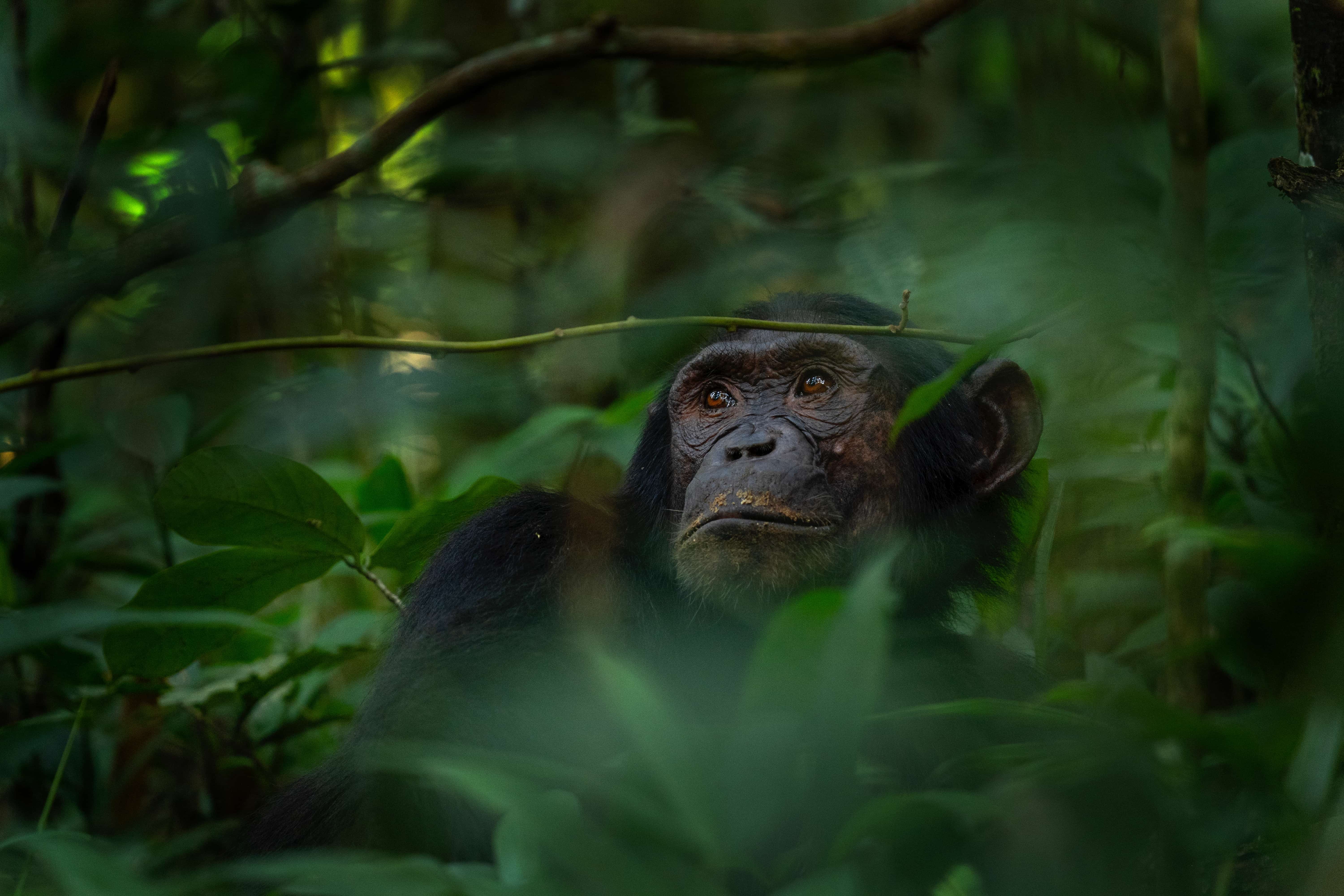
We share around 98.7% of our genetic blueprint with the chimpanzee. Though these great apes are widely distributed across the Afro-tropics, one of the best places to observe wild chimpanzees — specifically the eastern subspecies (Pan troglodytes schweinfurthii) — is Kibale Forest National Park in Uganda.
Half-day tracking excursions run in the mornings and afternoons, with a better than 90% chance of sighting the chimps during a one-hour encounter. For a deeper experience, a full-day habituation programme can be arranged, walking through the forest with park rangers and following a chimpanzee group through its daily activities.
Madagascar’s Indris
The largest of Madagascar’s 110-odd lemur species, the indri (Indri indri) can weigh up to 20 pounds. Though not an ape, this remarkable prosimian is often described as ape-like, thanks to its vestigial tail and black, gloved hands.
Responsibly managed tourism plays a meaningful part in sustaining conservation efforts. Many Madagascar itineraries include a visit to the rainforests of Andasibe-Mantadia National Park, largely to see its thriving population of habituated indris on guided walks. Hearing the whale-like calls of indri families ring out from mist-shrouded montane forest is pure Malagasy magic. As indris — critically endangered — do not survive in captivity, their rainforest home is the only place to see them, often leaping up to 10m between trees.
Madagascar’s Nocturnal Lemurs
Madagascar’s nocturnal lemurs range from the bizarre, cat-sized aye aye (Daubentonia madagascariensis) to our smallest relative, Madame Berthe’s mouse lemur (Microcebus berthae), which weighs just 30 grams.
The nocturnal families include woolly lemurs (Avahi), sportive lemurs (Lepilemur), fork-marked lemurs (Phaner), giant mouse lemurs (Mirza), dwarf lemurs (Cheirogaleus) and mouse lemurs (Microcebus). Night walks in protected areas such as Montagne d’Ambre and Kirindy Forest are a popular pursuit, with nocturnal lemurs high on most visitors’ wish lists.
Sites such as Masoala National Park, Fontenay Private Park near Montagne d’Ambre, Andasibe-Mantadia and Ranomafana National Parks generally reward nocturnal lemur searches, but the tinder-dry Kirindy Forest stands out for nocturnal primate diversity. In an hour’s night walk you can readily see googly-eyed red-tailed sportive lemurs, vocal, resin-munching pale fork-marked lemurs and plenty of grey mouse lemurs. Fat-tailed dwarf lemurs are about in spring and summer but absent in winter when, uniquely among primates, dwarf lemurs aestivate.
Madame Berthe’s Mouse Lemur
Seeing Kirindy’s other two nocturnal lemur species takes luck and an expert guide. Coquerel’s giant mouse lemur is missed by most: it is skittish, fast and stays high in the trees. The most enigmatic of Kirindy’s primates is Madame Berthe’s mouse lemur, our tiniest relative at just 1.058 ounces, which forages alone at night but often sleeps in groups by day.
Given the severity of threats to its only forest home, Menabe Antimena Protected Area, this pint-sized wonder is classified as critically endangered and was feared extinct around 2018. During 2022 and 2023, however, a number of visitors were fortunate enough not only to see them but to document their sightings with excellent images.
Red Colobus Monkeys: The Miner’s Canaries of the Primate World
The biodiverse Upper Guinea forests of West Africa are a treasure trove for naturalists. A wide variety of often localised primates live in these fragmented forests, including several colobus species.
It has long been recognised that when unsustainable hunting and habitat destruction for agriculture, mining and logging take hold, the first primates to disappear from African communities are the red colobus monkeys (Piliocolobus). These understudied, large-bodied, photogenic flagship primates can therefore be seen as emblematic of Africa’s tropical forest biodiversity crisis. Their complex vegetarian diets mean red colobus monkeys mostly do not survive in captivity, so — as with Madagascar’s indri — their natural rainforest homes from Senegal to Ivory Coast are the only places to see them.
Trips to Sierra Leone include two sites, Tiwai Wildlife Sanctuary and Gola Rainforest, where most visitors manage to see Upper Guinea (also known as western or bay) red colobus monkeys (Piliocolobus badius). Other monkeys often seen alongside them include the strikingly coloured Diana guenon (Cercopithecus diana), king colobus (Colobus polykomos) and olive colobus (Procolobus verus).
The best months to visit the Upper Guinea rainforests are from December through to late March.