Destinations · 30 July 2024
Best Time of Year to Visit Chile: Going from North to South
Chile stretches over 4,000 kilometres down the western edge of South America, and that extraordinary length is precisely what makes timing your trip so tricky. Conditions in the Atacama Desert have almost nothing in comm
The Best Time of Year to Visit Chile: A Region-by-Region Guide
Chile stretches over 4,000 kilometres down the western edge of South America, and that extraordinary length is precisely what makes timing your trip so tricky. Conditions in the Atacama Desert have almost nothing in common with those in Patagonia, and the country’s Pacific islands and wine valleys follow their own rhythms entirely.
This guide breaks Chile down region by region, setting out when to go and what each season actually offers.
Atacama Desert
Best time to visit: May to September
The Atacama is the driest desert on earth and can be visited at any point in the year, but the driest stretch runs from May to September. Those months suit travellers tied to the British summer holidays, and they also work neatly in reverse for anyone combining the desert with Patagonia.
The landscape here is one of stark contrasts. Wind-carved canyons, active volcanoes and rolling sand dunes sit alongside vividly coloured green and red lakes and spouting geysers. You might spend one morning watching flamingos at Laguna Chaxa and the following evening watching the sun go down over the Moon Valley.
Why May works well
May brings mild temperatures and clear skies to northern Chile. You can explore the salt flats, geysers and hot springs without battling either heat or rain, and the clarity of the sky makes the most of dramatic formations such as Devil’s Throat and its surrounding gorges.
Rapa Nui (Easter Island)
Best time to visit: year-round, with February a standout
Easter Island is rewarding in any season. The Chilean summer brings the warmest conditions, but the territory enjoys favourable weather throughout the year, so the Moai statues and the spectacular Rano Kau crater are accessible whenever you arrive.
A tour taking in Ahu Akivi introduces visitors to the island’s iconic stone figures. One Moai at the Ahu Huri site is the only known example with four hands. The experience continues at Ahu Akivi, an archaeological site associated with legends about its seven Moai, before reaching Ahu Vai Teki, where a dense concentration of caverns and holes is thought to have once held water supplies for early inhabitants.
Why February works well
February sits in the middle of the southern hemisphere summer but falls outside the peak Christmas and January rush. It is also when the annual Tapati festival takes place – a competition between clans, each putting forward a candidate for queen of the festival.
Chilean Wine Country
Best time to visit: March to April
The winelands welcome visitors all year, but the autumn shoulder season is arguably the finest moment. Wine tasting, grape stomping and the region’s wine routes are all at their best.
In areas such as Colchagua Valley, in the heart of the central valley, harvest festivals fill the air with music each year. A visit to Viña Santa Cruz offers a first-hand look at wine production, including a tasting session and a tour of a working winery.
Wine festivals are also a route into Chilean gastronomy more broadly, with the chance to learn which wines suit traditional dishes such as cazuela, the country’s national comfort food. For anyone seriously interested in wine, central Chile is hard to beat.
Why March works well
March marks the shift from summer to autumn, and the change shows in the landscape. Reds and yellows spread across forests and hills, reflected in clear lakes, while lush vegetation brings fresh colour to the region.
Lake District
Best time to visit: October to April
The Lake District is at its busiest between Christmas and the end of January, so travelling outside those weeks gives you a truer sense of the place. Basing yourself in the small town of Puerto Varas puts the Andean lake crossing into Argentina within reach, along with the native forest that surrounds the Petrohué falls.
Puerto Varas has a history worth exploring in its own right. German colonists settled there in 1852, and their influence remains visible in the town’s intricately designed buildings, including the church of Sagrado Corazón.
Why April works well
April suits walkers who prefer to hike without the crowds, and it ranks among the best months of the year for trekking. Autumn is in full swing and the scenery has completed its transformation, so you can take your time over Chile’s natural beauty without the numbers you would encounter earlier in the year.
Chilean Patagonia
Best time to visit: late October to April, with February and March for quieter trails
Patagonia is accessible from the end of October through to April. The ideal window depends on what you want: sole use of the parks and trails, or the warmest, driest conditions of the year.
February and March fall outside the Chilean summer holidays, when domestic and international visitor numbers rise. You get a quieter experience, comfortable temperatures and somewhat less wind.
Torres del Paine National Park, a few hours’ drive from Punta Arenas in the far south, holds wild landscapes within the Andes, from glaciers to rugged plains. The higher, winding routes lead deeper into these surroundings and a more remote, less crowded encounter with nature.
Why November works well
November’s mild temperatures suit outdoor activity in Patagonia, whether that means the adrenaline of white-water rafting or a more measured guided hike. Along the Carretera Austral, lupins bloom in their thousands, turning the landscape into a sea of purple.
Aysén
Best time to visit: December to February
The southern region is at its most accessible during the Chilean summer. Its untamed wilderness makes navigation trickier than elsewhere, but the dry summer months open it up, particularly for a self-drive trip.
Coyhaique, the ‘place of lagoons’, sits among snow-capped mountains and offers plenty of grade III rapids for kayaking. Following the Baker River downstream is a memorable experience, with sights and stops along the way, not least the forest village of Tortel, where footbridges connect everything.
The Puyuhuapi hot springs, among the best known in Latin America, are ideal for unwinding on a hot summer’s day. They overlook the Puyuhuapi fjord and are fed by the waters of Melimeyu Volcano.
Why January works well
January is the hottest month in Chile, and in Aysén the scenery lends itself to photography – from the glacial Laguna Cerro Castillo to Parque Pumalín, the southernmost temperate rainforest in the world. Wherever you go, you are likely to come away with a striking set of images.
Australis Fjord Cruise
Best time to sail: late November to early March
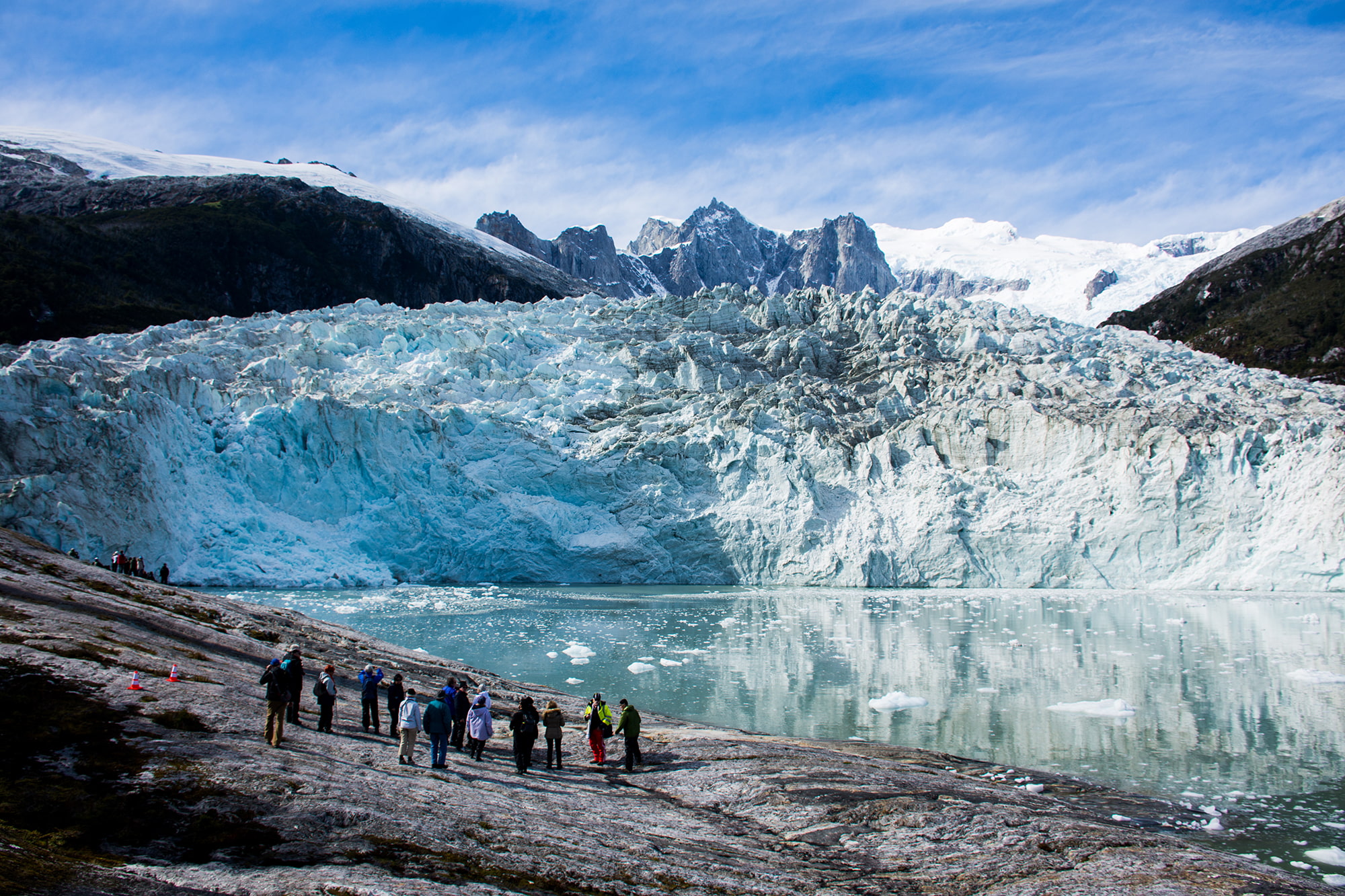
The Chilean summer is the season for an Australis fjord cruise. December is a particularly appealing choice as the country moves into full summer. Sailing opens up parts of Patagonia that can only be reached by ship: pristine sub-polar forest, blue glaciers and rugged snow-capped mountains, all lit by the high summer sun.
Alongside the scenery, there is a full programme of daily activities. Exploring remote terrain on foot brings you closer to the abundant wildlife, including penguins, elephant seals and a rich variety of birdlife. Zodiac excursions can even reach uninhabited islands that are home to rare species. Expedition leaders provide context on the region’s flora, fauna and history throughout.
Why December works well
By December, summer is well under way and Chile’s peaks, glaciers and turquoise lakes are at their most luminous. Around 17 hours of daylight make it easier to spot local birdlife, sea lions and, occasionally, whales and dolphins.
A Final Word on Timing
Chile rewards a little forward planning. Decide which regions matter most to you, check how their seasons align, and build an itinerary around those windows rather than trying to fit everything into a single trip. The country’s length means the answer to ‘when should I go?’ changes depending on where you are heading.