Destinations · 14 May 2026
Best Time to Visit Victoria Falls
Few natural sights match the sheer scale of Victoria Falls. A vast curtain of water drops into the gorge below with a roar you feel as much as hear, and the spray can be seen from miles away. You can view the falls from
Best Time to Visit Victoria Falls
Few natural sights match the sheer scale of Victoria Falls. A vast curtain of water drops into the gorge below with a roar you feel as much as hear, and the spray can be seen from miles away. You can view the falls from either the Zambian or the Zimbabwean side, and both offer their own perspective on this remarkable spectacle.
So when should you go? There is no single answer, as the experience changes dramatically with the seasons. Water levels shift throughout the year depending on rainfall far upstream in Angola, so the guidance below is indicative rather than fixed. What follows is a season-by-season and month-by-month breakdown to help you decide what suits you best.
Seasons at a Glance
High-water season: February to July
- The falls at their most powerful
- Lush, mist-fed rainforest around the viewing points
- Dramatic aerial views
Low-water season: August to January
- Safer access to Devil’s Pool
- White-water rafting on the Zambezi
- Clearer views with less spray
High-Water Season (February to July)
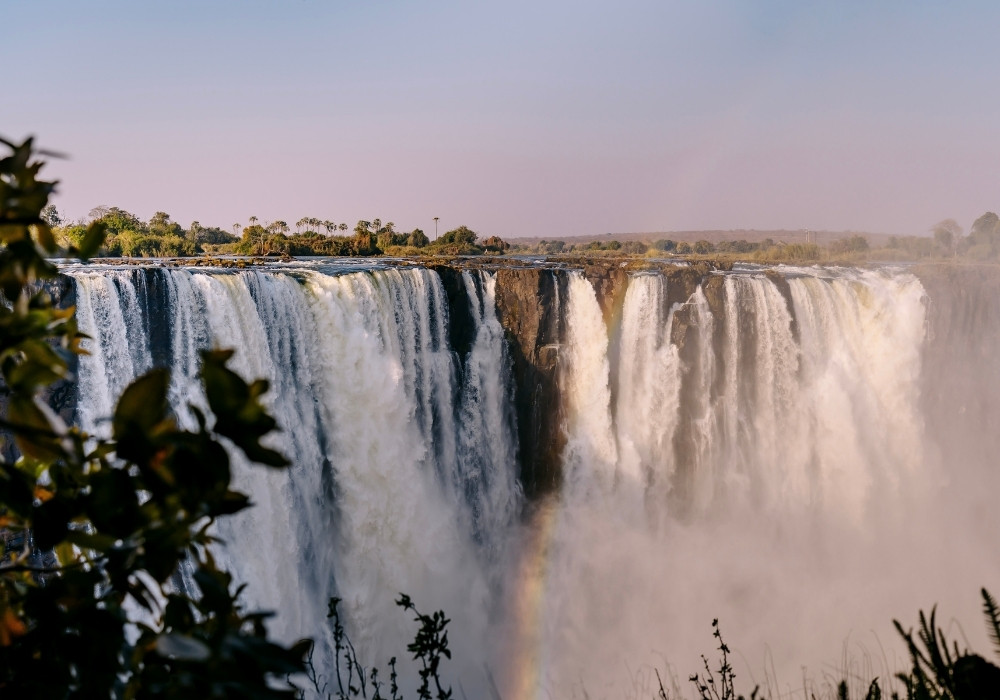
If you want to see Victoria Falls at full force, plan your visit between February and July. This is when the Zambezi is at its most voluminous, and the resulting spray creates rainbows that arc across the gorge, sometimes two at once. The mist soaks the surrounding rainforest, and the constant moisture keeps the vegetation vivid and green.
The trade-off is visibility. Heavy spray can obscure parts of the falls and make photography tricky, particularly at the height of the season. Bright mornings and late afternoons tend to give the best chance of a clear view and a rainbow. It is also worth noting that the Zambian side can become difficult to access when the water is at its highest, so the Zimbabwean side is often the better bet during these months.
Low-Water Season (August to January)
As the year progresses, the flow drops and the character of the falls changes. More rock face is exposed, the spray lessens, and views become sharper. This is the period for activities that depend on lower water: white-water rafting on the Zambezi, sunset cruises, and, once levels are deemed safe, swimming in Devil’s Pool at the very lip of the falls.
Water levels reach their lowest point around October and November. Early in the season (August and September) and late in it (December and January), you have a better chance of catching the falls with more volume. The quieter river conditions also make sunset cruises especially pleasant, with the sky turning red and orange as the sun goes down.
Month-by-Month Guide
January
Hot and rainy; water levels beginning to rise
- Highs: 30°C / Lows: 18°C
- Humidity: 73%
- Rainfall: 168mm
January falls in the hot, rainy season, and humidity is high throughout. Water levels are on the way up but have not yet peaked, which means the falls flow generously without the full force of spray that comes later. Travel costs tend to be lower than in peak months, and the cascades still offer excellent photographic opportunities.
February
Hot and rainy; water levels rising towards peak
- Highs: 29°C / Lows: 18°C
- Humidity: 77%
- Rainfall: 126mm
February continues the summer pattern, with conditions similar to January but with the water rising to peak flow. This is one of the most impressive times to see the falls, as the full volume of the Zambezi pours over the basalt ledge into the mist-filled chasm below. Bring a camera and expect to use it from every angle you can reach.
March
End of the hot, rainy season; peak water levels
- Highs: 30°C / Lows: 17°C
- Humidity: 70%
- Rainfall: 70mm
Rainfall eases in March, though the weather remains hot and humid. Water levels are at their peak, and the scale of the falls becomes unmistakable. Around 500 million litres of water per minute plunge into the gorge, generating clouds of mist above the Zambezi.
April
Cooler transition begins; some showers
- Highs: 29°C / Lows: 14°C
- Humidity: 60%
- Rainfall: 24mm
April marks a shift towards drier weather, though showers are still possible, and the water remains at peak fullness. The landscape is at its most lush after the rains. A helicopter flight over the falls gives a completely different perspective, with the green forest, white cascades and blue river forming a striking contrast.
May
Cooler and drier; water levels still high
- Highs: 27°C / Lows: 10°C
- Humidity: 44%
- Rainfall: 3mm
May is bright, dry and warm, and it is one of the best months to visit. Rainfall drops sharply, and the cool season is approaching. It is also a good time for wildlife in nearby parks such as Hwange, where elephants and buffalo gather at waterholes and thinning vegetation makes them easier to spot.
June
Cool, dry season begins; water flow starting to decrease
- Highs: 25°C / Lows: 6°C
- Humidity: 42%
- Rainfall: 1mm
The dry season arrives in June. Water levels begin to fall but remain high, and there is less spray to obscure the view. The cooler, pleasant weather is well suited to daytime game viewing. A trip west to Chobe National Park, or further into Moremi and the Okavango Delta, offers reliable sightings of hippo, crocodile and birdlife, while lions tend to be more active in the cooler conditions.
July
Cool and dry; high to medium water flow
- Highs: 25°C / Lows: 6°C
- Humidity: 39%
- Rainfall: 0mm
Conditions in July are similar to June, with high to medium flow. As the water recedes, more of the rock face is revealed, though this affects the eastern Zambian side more than the western Zimbabwean side. The Zimbabwean side offers broader panoramic views and good photographic opportunities. Cataract Island becomes accessible from around this time until January, and makes a memorable spot for breakfast or a picnic beside the falls.
August
End of the cool, dry season; excellent for rafting
- Highs: 28°C / Lows: 8°C
- Humidity: 32%
- Rainfall: 0mm
Temperatures begin to climb in August, with warm, sunny days and cool, clear nights. Water flow is lower and more rock wall is exposed. This is a strong month for white-water rafting, and Devil’s Pool becomes an option for the adventurous. With the falls drawing less attention, it is also a good time to focus on wildlife. Zambia’s Kafue, Lower Zambezi and South Luangwa regions offer close encounters with animals that often wander right up to safari vehicles.
September
Hot, dry season begins; lower water levels
- Highs: 32°C / Lows: 8°C
- Humidity: 27%
- Rainfall: 2mm
September pushes past 30°C and ranks among the driest months. Water levels drop further, and the eastern wall may be completely bare. Staying on the Zimbabwean side is advisable at this time. From the viewing points you can look right down to the base of the falls, and where it is safe to do so, descend for a sense of the sheer scale and rugged beauty of the gorge.
October
Peak of the hot, dry season; lowest water flow
- Highs: 33°C / Lows: 17°C
- Humidity: 31%
- Rainfall: 27mm
October is the hottest month, with rising humidity, unreliable rainfall and low wind speeds. Water flow is at its lowest. Rather than making the falls the centrepiece of a trip this month, it may be better to focus on other areas of Zambia, Zimbabwe and Botswana. Large elephant herds gather around scarce water sources in Hwange and Chobe, offering excellent viewing.
November
Hot, rainy season begins; sunny with occasional rain
- Highs: 32°C / Lows: 18°C
- Humidity: 47%
- Rainfall: 64mm
As the dry season gives way to the rains, humidity rises and temperatures ease slightly. Water levels are still low, but November brings spectacular thunderstorms, with dark skies and lightning transforming the green landscape. The storms often clear to bright sunshine. It is also a rewarding month for birdwatching, with both resident and migratory species present.
December
Hot and rainy; water levels slowly rising
- Highs: 30°C / Lows: 18°C
- Humidity: 68%
- Rainfall: 174mm
December is when the rainy season settles in properly, bringing heat, humidity and dramatic afternoon thunderstorms. It is one of the wettest months, and the rains begin to lift the low water levels, refilling the falls ahead of the high-water period. This is also the start of the ‘Emerald Season’, a good time for birdwatching. Crowds are thinner, so if you don’t mind some rain, December can be a rewarding time to visit.
Frequently Asked Questions
When is the best time for wildlife viewing?
The dry season, from June to October, is best for wildlife. Hwange National Park is the closest major park, and with waterholes scarce during these months, large herds of elephant, buffalo and antelope, along with predators, are easier to find.
When are the falls at their clearest?
Visibility is best from August to December, when water levels are lower. During peak season, the volume of spray can significantly reduce how much of the falls you can see.
How many days do you need at Victoria Falls?
Around three days is typical for seeing the main sights and trying a few activities. How long you actually need depends on what you want to do, and whether you plan to combine the falls with Zimbabwe, Zambia or Botswana.
Planning Your Visit
Victoria Falls rewards careful timing. The high-water months deliver raw power and rainbows but can hide the view behind spray; the low-water months reveal the gorge’s structure and open up rafting and Devil’s Pool. If wildlife matters as much as the falls, the dry season from June to October is the sweet spot for combining both. Whichever season you choose, the experience is unlike anywhere else.