Wildlife & Nature · 28 August 2026
Best Wildlife Holidays for Each Month of the Year
Timing matters more than almost anything else in wildlife travel. Arrive in the right month and you might catch a river crossing, a courtship display or a whale shark gliding past. Arrive at the wrong one and you'll find
The Wildlife Lover’s Calendar: Where to Go and When
Timing matters more than almost anything else in wildlife travel. Arrive in the right month and you might catch a river crossing, a courtship display or a whale shark gliding past. Arrive at the wrong one and you’ll find empty plains and quiet forests.
Below is a month-by-month guide to some of the world’s most rewarding wildlife destinations, with notes on when to go and what you stand to see.
January: Antarctica
When to go: November to February
The turn of the year falls in Antarctica’s peak season, when conditions are at their most comfortable and the region enjoys more than 20 hours of daylight a day. That extra light leaves plenty of time for excursions ashore and on the water.
Crossing the Drake Passage brings you to the Antarctic Peninsula, where Zodiac outings offer close encounters with whales. Several species gather here in January to feed on krill, among them fin, blue, minke, humpback and orca. Adélie penguins — the smallest of the region’s penguins — are another highlight, and expert guides on board help you make sense of what you’re seeing.
February: Argentina
When to go: January to April, or October to December
Argentina’s size works in its favour: the tropical north and the cooler reaches of Patagonia offer entirely different experiences within a single trip. February is a popular month to travel, and the country rewards those who linger.
The Valdés Peninsula ranks among the world’s best places to watch southern elephant seals. At Iguazú Falls, butterflies and birds are out in force. Further northeast, the vast Iberá Wetlands are home to capybara and giant otters. Splitting your time between regions is the best approach — the country is simply too varied to rush.
March: St Helena
When to go: January to March
This remote island supports an extraordinary range of life, including some 400 bird and plant species. March is a particularly good month for whale sharks, which can be seen off the coast.
A boat trip puts you in the best position to photograph these gentle giants, with guides taking you to the spots where they tend to gather. On land, the island’s most famous resident is Jonathan, a Seychelles giant tortoise and the world’s oldest living land animal. Hatched in 1832, he was brought to St Helena from the Seychelles in 1882 alongside three other tortoises, and acquired his name in the 1930s from the then governor, Sir Spencer Davis.
April: Malawi
When to go: April to October
By April, Malawi’s rains have largely passed and temperatures are pleasantly warm, leaving the landscapes a vivid green. It’s an ideal moment for a trip that pairs safari with time on the beach.
Majete Wildlife Reserve offers the chance to track the Big Five, along with sable antelope and birds such as Livingstone’s flycatcher. The second half of a trip can be spent unwinding on the shores of Lake Malawi, with lodges on the western side of the Nankumba Peninsula providing a peaceful base.
Malawi suits travellers who have already done a safari elsewhere and want somewhere less trodden. Tourism is growing, but the country retains a quiet, unpolished charm.
May: Ecuador and the Galápagos Islands
When to go: Year-round, or March to November
May marks the shift towards Ecuador’s dry season, and it’s one of the finest times to be in the Galápagos. Blue-footed boobies begin their courtship displays, and marine iguanas — the only lizards in the world that feed and live at sea — are easy to spot. Eleven similar subspecies are scattered across the archipelago’s islands.
Santa Cruz Island offers sightings of western Santa Cruz giant tortoises in the wild. On the mainland, the Ecuadorian Amazon adds howler monkeys and a wholly different cast of wildlife to the itinerary.
June: Botswana
When to go: June to September
Once the pans dry up in June, Botswana’s wildlife converges on permanent water sources. The result is larger concentrations of animals and better game drives.
A mobile safari through the Moremi Game Reserve, the Okavango Delta and the Chobe River keeps group sizes small and camps moving with you, which means fewer crowds and access to quieter corners alongside well-known destinations such as Chobe National Park.
A mokoro ride along the Okavango’s clear channels is a highlight. Gliding quietly through the reeds, you can look for everything from reed frogs to elephants, with a guide on hand to explain the habitats you’re passing through.
July: Brazil
When to go: July to November (Pantanal)
July sits in Brazil’s dry season, which suits wildlife watching across the south, the Amazon, the Pantanal and the coastal regions alike.
In the Amazon, a motorised canoe takes you into flooded forest, where Amazonian manatee, jaguar and river turtles may appear. The Pantanal offers a different spectacle: tanagers, macaws and parakeets calling through lush forest and tropical wetland. Between them, the two regions cover an enormous range of habitats and species.
August: Kenya
When to go: December, March, and June to October
August is migration season in Kenya, when roughly two million hoofed animals move through the Masai Mara and make the celebrated river crossings.
The Mara is one of the finest game-viewing locations anywhere, and peak season is a superb time to be there. Wildebeest and other herbivores dominate the scene, but predators are rarely far behind — the tension between the herds and the cats that hunt them plays out in plain view.
September: Madagascar
When to go: September to October
September falls in Madagascar’s austral spring, a strong period for wildlife generally and for lemurs in particular.
Andasibe-Mantadia National Park shelters eleven lemur species. A night walk offers the best odds of finding some of the island’s more unusual nocturnal residents, among them the furry-eared dwarf lemur, the eastern woolly lemur and Goodman’s mouse lemur. These endangered animals tend to be more active in the area at this time of year.
The park’s mist-wrapped montane rainforest is the country’s foremost protected rainforest, known for indri, Parson’s chameleon, blue coua and a wealth of endemic frogs. Pairing it with time on the north-west coast makes for a well-rounded two-centre trip.
October: South Africa
When to go: Year-round, or September to March
October combines bright spring days with excellent whale watching, making it one of the best months for a South African safari.
A trip that takes in the Winelands, the coast and a private reserve covers a lot of ground. The dry weather suits long lunches built around farm-to-table produce. Further south, Hermanus — perched where a lagoon meets the sea — is a fine place to watch whales from shore. At Pumba Private Game Reserve, warthogs trot across the plains and lions roam in their prides.
November: Guyana
When to go: September to November
November’s drier, warmer conditions make Guyana’s dense jungles more accessible, as the terrain becomes less swampy and easier to navigate.
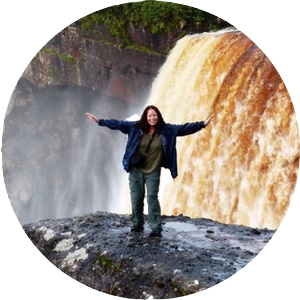
A typical itinerary might take in Kaieteur and Orinduik Falls before heading to Iwokrama for jungle hikes and a chance at the elusive jaguar. Further inland, lodges set among wetlands, savannah, river and forest offer access to rolling grasslands where giant anteaters forage among termite mounds. The nearby Rupununi River is home to wild giant river otters.
A dugout canoe trip along the Burro Burro River is a peaceful way to take in the birdlife — toucans in the trees, kingfishers hunting, and a chorus of calls rising from every direction.
December: Costa Rica
When to go: November to April
December brings a happy combination of good weather and abundant wildlife, with lush rainforest and pristine beaches both on the table.
Marino Ballena National Park offers the chance to see white-faced monkeys and humpback whales. Continuing to the Osa Peninsula doubles your opportunities for marine life and opens up Corcovado National Park, home to the scarlet macaw. Corcovado is arguably the best place to see the bird in the wild: hundreds of macaws gather at clay licks in the rainforest, eating the clay to supplement their diet.
Planning Around the Calendar
The common thread running through all of these destinations is timing. A month either way can transform what you see, so it pays to build a trip around the wildlife you’re most hoping to encounter rather than the other way round. Decide what matters most — a migration, a courtship display, a particular species — and let the calendar follow from there.