Wildlife & Nature · 14 April 2026
‘Beyond the Big Five’: Alternative Nature & Culture Experiences in Africa & Latin America
Most travellers arrive in Africa or Latin America with a familiar checklist: the Big Five in Uganda, rare species deep in the Amazon. Those experiences earn their reputation, and rightly so. But the countries that host t
Beyond the Big Five: Alternative Nature and Culture Experiences in Africa and Latin America
Most travellers arrive in Africa or Latin America with a familiar checklist: the Big Five in Uganda, rare species deep in the Amazon. Those experiences earn their reputation, and rightly so. But the countries that host them hold far more than their headline attractions, and the richest travel often happens once you step past the obvious.
Consider Botswana. The famous national parks deserve their fame, yet it is the lesser-known encounters that tend to linger longest in the memory. The same is true across Madagascar, Argentina, Costa Rica and Uganda. Below are some of the experiences that reward a closer look, from fossa in the forest canopy to macaws above a lagoon.
Madagascar
Few places on earth match Madagascar for sheer biological richness. Rainforests, peculiar species, distinct cultures and quiet beaches all sit within one island, and there are many ways to explore it.
Natural history draws the vast majority of visitors. Lemurs are the headline act, but the forest floor and canopy hold equally compelling sights: the fossa moving through dense branches, or the lowland streaked tenrec foraging for insects in coastal rainforest. The Nosy Be Archipelago offers a slower counterpoint, with deserted beaches and calm water. Malagasy culture itself is a blend of Malayo-Polynesian, African and European influences, best sampled in towns such as Antananarivo.
Because Madagascar’s regions differ so markedly, no two visits look alike. A small-group itinerary covering the south and east, for example, can move between protected rainforest and spiny bush, with a Malagasy guide on hand to locate lemurs, colourful reptiles and endemic birds.
What a Madagascar wildlife trip can include
Rainforest alive with colour and sound. In the humid forests of Andasibe-Mantadia and Ranomafana, indri calls echo through the canopy long before the animals themselves come into view. Andasibe is also a stronghold for the critically endangered diademed sifaka, while Ranomafana is the best place to look for golden and greater bamboo lemurs.
Rare birds in the spiny desert. Near Ifaty, the strange spiny bush habitat – once described by travel writer Dervla Murphy as “Nature’s Botanical Lunatic Asylum” – offers reliable sightings of the long-tailed ground-roller and the sub-desert mesite. These birds are found only in locally protected parcels of spiny bush.
Culture by land and sea. Travelling through the homelands of the Merina and Veso Sakalava peoples reveals Madagascar’s regional variations. Guides may point out Betsileo rice cultivation or explain the traditions of the seafaring Veso. A rickshaw tour of Antsirabe is an easy way to see everyday life up close, and the town’s craft stalls are worth browsing.
Argentina
Argentina rewards more than one visit. It is as vast and varied as its reputation suggests, and a single trip can only ever be an introduction.
The country is known for its food and wine, but its ecosystems range from the jungle around Iguazú Falls to the snow-capped peaks of Patagonia. Tango shows, the boat trip to Perito Moreno Glacier and penguin colonies along the coast are all part of the appeal. So too are the lakesides, the distinct neighbourhoods of Buenos Aires and the gaucho tradition. Staying at an estancia is the best way to understand that way of life, and it provides a contrast to the greener landscapes of the north and the ice of the south.
A route that combines cities, glaciers, waterfalls and wineries makes a sensible introduction, whether your interest lies in scenery, culture or wildlife.
Highlights of an Argentina itinerary
Asado in Buenos Aires. A high-end asado is essential. Grilled provolone, chimichurri and a tasting menu of classic Argentine dishes turn dinner into a relaxed fine-dining experience, and the city has no shortage of traditional asado restaurants.
The far south. The Glaciares region is one of Argentina’s most remote corners, where nature dominates and pumas are sometimes spotted. The 12km Cañadón de los Fósiles trail leads to views of the Upsala Glacier.
Wine and wildlife in Mendoza. The Uco Valley offers a quieter alternative to the better-known vineyards, with exclusive wineries and a different pace. A horse-riding excursion here brings you closer to the region’s flora and fauna. At the foot of Cordón del Plata, llama herds and striking birds roam freely, and on the climb towards Quebrada del Condor you may see an Andean condor in flight. The route follows ancient paths to a viewpoint at 2,800m.
Botswana
Botswana ranks among the finest safari destinations in Africa. The Big Five are present, but the country offers considerably more than that.
Lion, leopard, elephant, rhino and buffalo can all be seen. Between June and August, there is also a chance of encountering endangered African wild dogs as they search for dens at the start of winter. What sets Botswana apart is the variety of its landscapes, each alive with wildlife. A mokoro ride through the Okavango Delta places you in a watery world of hippos and smaller creatures among the papyrus. A land-based game drive in the Kalahari complements this, with everything from honey badgers to meerkats and abundant birdlife.
The Green Season – the summer rains – is often overlooked by travellers, yet it is an excellent time to see animals bringing their young into the wild. A tailor-made itinerary can combine the Okavango Delta and Linyanti wetlands across three Kwando camps, with daily game activities and two nights at Victoria Falls.
What to expect on a Green Season safari
Tracking wild dogs. At Kwando Lebala Camp, day and night game drives take place in the wild dogs’ natural habitat. Packs have denned in the south of the Kwando Reserve for more than two decades, making this one of the best places in the world to see them. June and July, during denning season, offer the strongest chances.
Walking safaris. Across the three Kwando camps, guided walks reveal the finer details of the bush: prints, plants and birds. Following hippo trails to their resting places, and learning how animals behave along the way, adds a different dimension to a safari.
Mokoro excursions. Floating through the Okavango Delta in a dugout canoe, water levels permitting, is an experience in itself. Red lechwe leap across the waterways, jacanas appear to walk on water, and kingfishers, bee-eaters and weaver birds are all common. The real pleasure lies in drifting quietly among reeds, papyrus and water lilies under wide skies, listening to the sounds of the delta and surrounding bush.
Costa Rica
Costa Rica is known for monkeys and sloths, but its landscapes and activities extend well beyond its iconic wildlife.
The country holds an remarkable range of species for such a small area. Monkeys, sloths, toucans and sea turtles are the most sought-after encounters, though there are many more. Over half the country is covered in rainforest, with varied microclimates and more than 70 national parks. Watching a red-eyed tree frog near Arenal, or catching sight of a rare resplendent quetzal in Monteverde, tends to stay with people. Rainforest-backed beaches and hikes to turquoise waterfalls round out the experience.
It is also possible to fit a great deal into a single itinerary. An example tour focused on wildlife can travel to less-visited nature zones, including Boca Tapada, where caimans, frogs, snakes and spiders emerge after dark.
Wildlife highlights to look out for
The Baird’s tapir. One of Costa Rica’s rarest species, the shy Baird’s tapir is most reliably seen at Tapir Valley Nature Reserve, where conservation work has restored wetlands and forest – and with them a healthy tapir population. The animals are most active at night, and a guided walk may be rewarded with an encounter.
Great green macaws. At Maquenque Ecolodge, the concentration of almendro trees where these endangered parrots feed and nest offers the best chance of seeing them. Treehouse rooms look out over the canopy and lagoon, making the lodge a natural base for birdwatchers.
The resplendent quetzal. San Gerardo de Dota Cloud Forest is the most reliable place in the country to see this emblematic bird. Quetzals may be found feeding on aguacatillo plants, or heard calling through the forest. Whether perched silently on a mossy branch or darting through the canopy, they are unforgettable. The surrounding rolling hills and oak forests are worth exploring in their own right.
Uganda
Uganda offers far more than its habituated mountain gorillas. Chimpanzee tracking, the Big Five and the shoebill all form part of a wider picture.
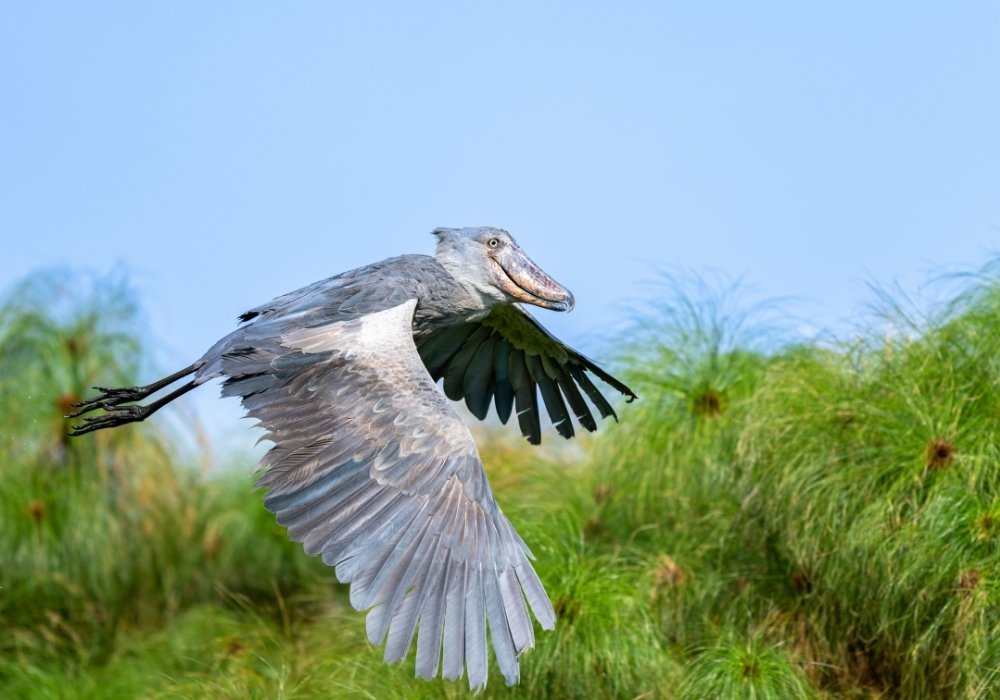
The country’s diversity is its greatest strength. Savannah, equatorial forest, papyrus swamp and remote plains dotted with hot springs all lie within reach of one another. Primate tracking, game drives and birdwatching fill the days, and each one feels different from the last. The Big Five are present, but Uganda also offers genuine oddities – chief among them the shoebill, a prehistoric-looking bird with an eight-foot wingspan.
A route covering gorillas, wildlife and waterfalls provides a useful framework for exploring the country.
Experiences worth building in
Bwindi’s primates and butterflies. The Afromontane rainforest of Bwindi Impenetrable Forest is best known for its habituated mountain gorillas, but L’Hoest’s and blue monkeys also live among the dense vegetation, scrambling through the canopy in search of food. Guides can point them out and explain their behaviour. Mixed butterfly species often gather at bush-pig mud wallows, and the forest’s bird list exceeds 345 species, including 23 Albertine Rift endemics.
Kibale and Bigodi Swamp. Wild chimpanzees can be tracked in the equatorial forest of Kibale, which also supports forest monkeys and a wealth of colourful birds. Guided walks in Bigodi Swamp may reveal Ugandan red colobus and red-tailed monkeys, along with sought-after birds such as the green-breasted pitta and black-and-white shrike flycatcher. After dark, nocturnal species including Demidoff’s dwarf galago, Thomas’s galago and the Eastern needle-clawed galago emerge, leaping from branch to branch.
Boat safaris on the Nile. A boat trip at Murchison Falls is an excellent way to see large numbers of hippos and some of Africa’s biggest Nile crocodiles, with a chance of the dinosaur-like shoebill. Cruising upriver is peaceful, with plains game and predators visible along the banks. Elephants frequently wade in the water close to the boat, while olive baboons and black-and-white colobus monkeys inhabit the riverine woodland. Afterwards, a hike up to the falls themselves brings you to the point where the Nile thunders through a seven-metre-wide ravine – close enough to feel the spray and hear the water crash.
Planning a trip that goes further
Travelling beyond the headline attractions does not mean missing them. It means treating them as one part of a larger picture, and leaving room for the fossa, the quetzal, the shoebill and the wild dog alongside the lion and the gorilla. These experiences can be shaped into a tailor-made itinerary, combining the well-known with the quietly remarkable across Africa and Latin America.