Wildlife & Nature · 25 April 2025
The Great Wildebeest Migration: Travel Guide to one of Africa’s Most Spectacular Natural Wonders
Across the open plains of East Africa, more than two million hoofed animals move as one, driven by instinct on a journey that never truly ends. This is the Great Migration — a living, breathing natural wonder and one of
The Great Wildebeest Migration: A Travel Guide to Africa’s Ever-Moving Spectacle
Across the open plains of East Africa, more than two million hoofed animals move as one, driven by instinct on a journey that never truly ends. This is the Great Migration — a living, breathing natural wonder and one of the most extraordinary wildlife events on the planet.
So what exactly is the Great Migration? When should you go? And how can you witness it in Kenya’s Masai Mara and Tanzania’s Serengeti National Park? This guide covers the gazelle, eland, zebra and wildebeest migration in East Africa.
What Is the Great Migration?
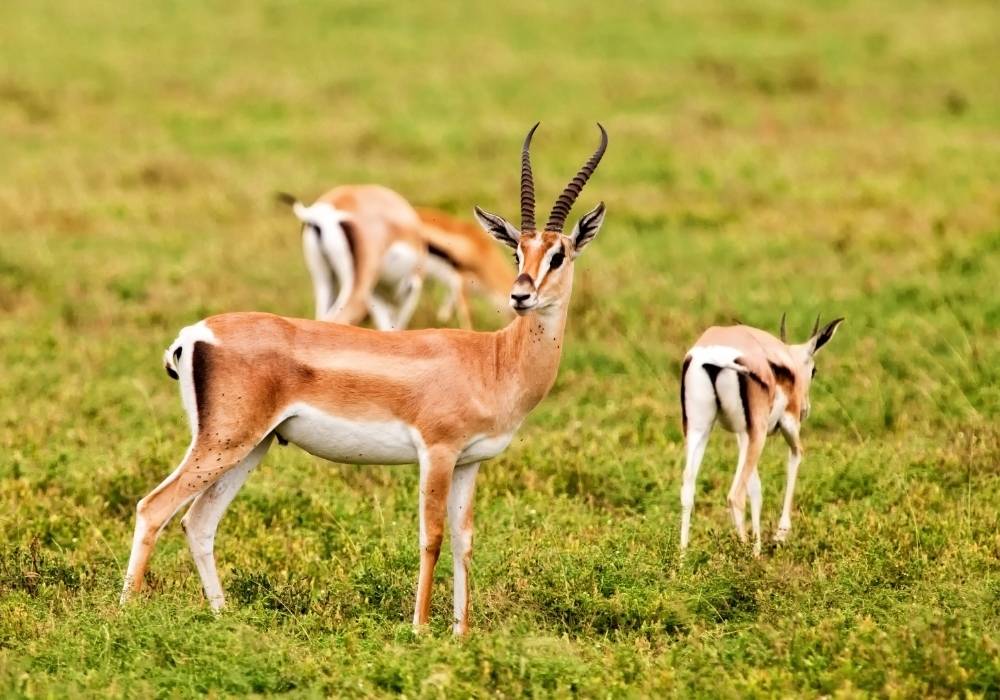
The Great Migration is the annual movement of around 1.5 million blue wildebeest (Connochaetes), 400,000 plains zebra (Equus quagga), 12,000 eland (Taurotragus oryx) and 300,000 Grant’s (Nanger granti) and Thomson’s gazelles (Eudorcas thomsonii) between the Serengeti and the Masai Mara.
Put simply, the animals follow the rains. They travel roughly 800km in a circular route across the plains, in search of greener, more mineral-rich pastures and water. The cycle begins around December to March, after the calves are born. When the dry conditions arrive between April and May, the herds set off north from the Serengeti towards the Mara, eventually returning in October to complete the loop.
During your visit, you may witness the heart-stopping moment when a herd of wildebeest plunges into the Mara River, water churning as Nile crocodiles attack the unsuspecting herbivores.
The gauntlet also includes big cats and spotted hyenas, which prey mostly on calves.
Where Does the Great Migration Take Place?
The Great Migration takes place in Tanzania and Kenya.
In Tanzania, the route runs through Serengeti National Park. The Serengeti migration season begins with the birth of calves and foals in the south. The roughly two million wildebeest, zebra, eland and gazelle then move northwest in pursuit of fresher grasses in the central Serengeti.
From there, the herds face the daunting task of crossing the Grumeti River into northern Tanzania, before passing through to southern Kenya for the start of the Masai Mara migration.
Once in Kenya, the wildebeest move around the Masai Mara. Again, they must contend with the threat of Nile crocodiles when crossing the Mara River. As the chaos subsides, the herds gradually move eastwards. After some time, they make the journey back to the Serengeti.
With its open savannahs and undulating grasslands, the Serengeti-Mara ecosystem supports an abundance of food for impressive populations of large mammals.
When Is the Best Time to See the Migration?
The migration is a year-round phenomenon, but what you see depends on where the herds are. Use the month-by-month calendar below to plan your visit.
- Calving Season (December–March)
- Serengeti, Tanzania (April–May)
- Crossing the Mara River (June–July)
- Masai Mara, Kenya (July–October)
Calving Season (December–March)
Between December and March, a slower safari through the southern Serengeti and the Ndutu Plains section of the Ngorongoro Conservation Area (NCA) places you amid verdant landscapes.
Up to 8,000 wildebeest calves are born every day from January to the end of February. They are up and walking within about 15 minutes of birth. Soon after, they re-join the herd to avoid being too vulnerable to predators, which are always nearby.
The onset of the rains brings an abundance of food for the herbivores. Wildebeest remain until the long rains stop in late April, with the main calving grounds located southeast of Seronera.
The Great Migration in the Serengeti, Tanzania (April–May)
After the wildebeest bear their young in February and March, the Serengeti migration season continues. Plains zebra travel alongside the wildebeest herds — a key part of the Great Migration, as they share resources and contribute to the overall balance of the ecosystem as grazers.
By May, columns of wildebeest can stretch for several kilometres as they congregate by the Moru Kopjes, close to Dunia Camp. Balloon safaris can be arranged from here, lifting off from Seronera.
Between April and May, although the chances of rain are higher, there is less tourist traffic and — consequently — a drop in prices. This is particularly useful for solo travellers, as some camps lower their single supplements.
Crossing Rivers: Grumeti River and Mara River (June–July)
From early May to mid-June, the Great Wildebeest Migration may be found in both the Western Corridor (western Serengeti) and the northern Serengeti plains. By May, the herds are likely to be crossing the Grumeti River, offering potentially spectacular river crossings.
Kirawira, Mbalageti Serengeti, &Beyond Grumeti Serengeti Tented Camp and the seasonal mobile camps are all well positioned for spellbinding views of the river crossings.
June is known as the shoulder season. Being outside peak season, prices are a little lower. It is also a great time of year for birding in a greener landscape. Any rains are generally punctuated by blazing tropical sunshine and clear conditions.
As June moves into July, the herds continue north along the western edge of the park towards an even riskier barrier: the Mara River in the northern Serengeti.
Once again, you may encounter tense scenes of wildebeest launching into the water, trying to cross as crocodiles close in and big cats and hyenas wait on the other side to pick off weaker individuals.
The Mara River crossings are among the most exciting wildlife events to be witnessed anywhere in the world — a genuine once-in-a-lifetime travel experience.
The Great Migration in the Masai Mara, Kenya (July–October)
By July, the Kenya migration season arrives following the Mara River crossing.
A continuation of the Serengeti-Mara ecosystem, the Masai Mara National Reserve comprises 1,510 km² of open savannah and rolling grasslands on the edge of the Rift Valley. It encompasses the national reserve and the adjacent private concessions, where game is equally abundant but visitor numbers are much lower.
Staying in the concession areas therefore offers a more intimate experience.
Instead of the 20–30 vehicles that may gather around a big cat sighting in the national reserve, you will see no more than three or four in a private conservancy, which also reduces stress on wildlife. Game drives in the national reserve are restricted to the main roads during daylight hours, while in private conservancies you can venture off-road and enjoy top-quality sightings of sought-after species.
When the river crossings have ended, the migrating columns have gradually moved eastward by September and October. But the herds must endure the perils of crossing the Mara River once more as they head southward.
The Great Migration Safari Experience
What is a Great Migration safari actually like? In a nutshell, it is an awe-inspiring, genuine once-in-a-lifetime wildlife travel experience.
In both Tanzania and Kenya, there are plenty of accommodation options and different ways to view this incredible natural phenomenon.
Luxury lodges and camps are plentiful. A stay at the uniquely placed Entim Mara Camp comes highly recommended: after dramatic scenes featuring the migrating herds and their predators, retire to one of the comfortable, en-suite tents and enjoy the camp’s warm, authentically Masai aesthetic.
Mobile camps offer a versatile and convenient way to experience a safari in the Serengeti.
Nasikia Mobile Migration Camp is located right in the heart of the action. From June to October at Kogatende in the far northern areas of the Serengeti, the camp sets up to view the herds as they run the gauntlet of crocodiles in the Bologonja and Mara rivers. Between December and March in the Small Marsh area of Ndutu (Ngorongoro Conservation Area), you can witness the calving season. While visiting, you will inevitably delight in observing newborn calves, which attract dramatic predator activity.
Four Tips for Planning Your Great Migration Safari
- Book as early as possible, at least a year in advance, to secure your preferred lodges and camps such as the remote Nimali Mara. The more sought-after accommodation options fill up very quickly, even though there are many alternatives to choose from.
- Arrange your travel dates carefully to optimise your chances of enjoying the Great Migration.
- Avoid crowds by choosing private conservancies.
- Diversify your game viewing by ending your Great Migration safari at a lodge or camp located away from the Serengeti-Mara ecosystem, such as Amboseli and/or Laikipia — or pair it with a beach break in Mauritius or Zanzibar.
Planning Your Trip
An excellent example of a bespoke Great Migration itinerary is a seven-night Kenya safari, designed to place you in a prime position to watch the herds and their associated predators.
A tailor-made Tanzania itinerary might begin in Tarangire National Park, famous for its baobab trees and huge elephant population, before heading into the central Serengeti for two full days of game viewing. You could also relax by Lake Manyara along the Rift Valley.
Whichever route you choose, the key is to match your dates and locations to the herds’ movements — and to book well ahead.