Wildlife & Nature · 22 August 2024
The Six Types of African Safari
A safari need not revolve around game drives alone. Across the continent there are many ways to encounter wildlife, from the largest elephants down to the smallest frogs and insects. Some creatures demand a particular ap
The Six Types of African Safari
A safari need not revolve around game drives alone. Across the continent there are many ways to encounter wildlife, from the largest elephants down to the smallest frogs and insects. Some creatures demand a particular approach if you hope to see them at all.
Beyond the familiar vehicle-based safari, you can travel on foot, by canoe or by light aircraft, and shape the trip around your circumstances — whether that means travelling as a family, as a couple or on honeymoon. Below is a closer look at six distinct styles, what each involves and who they tend to suit.
1. Safari by Mokoro
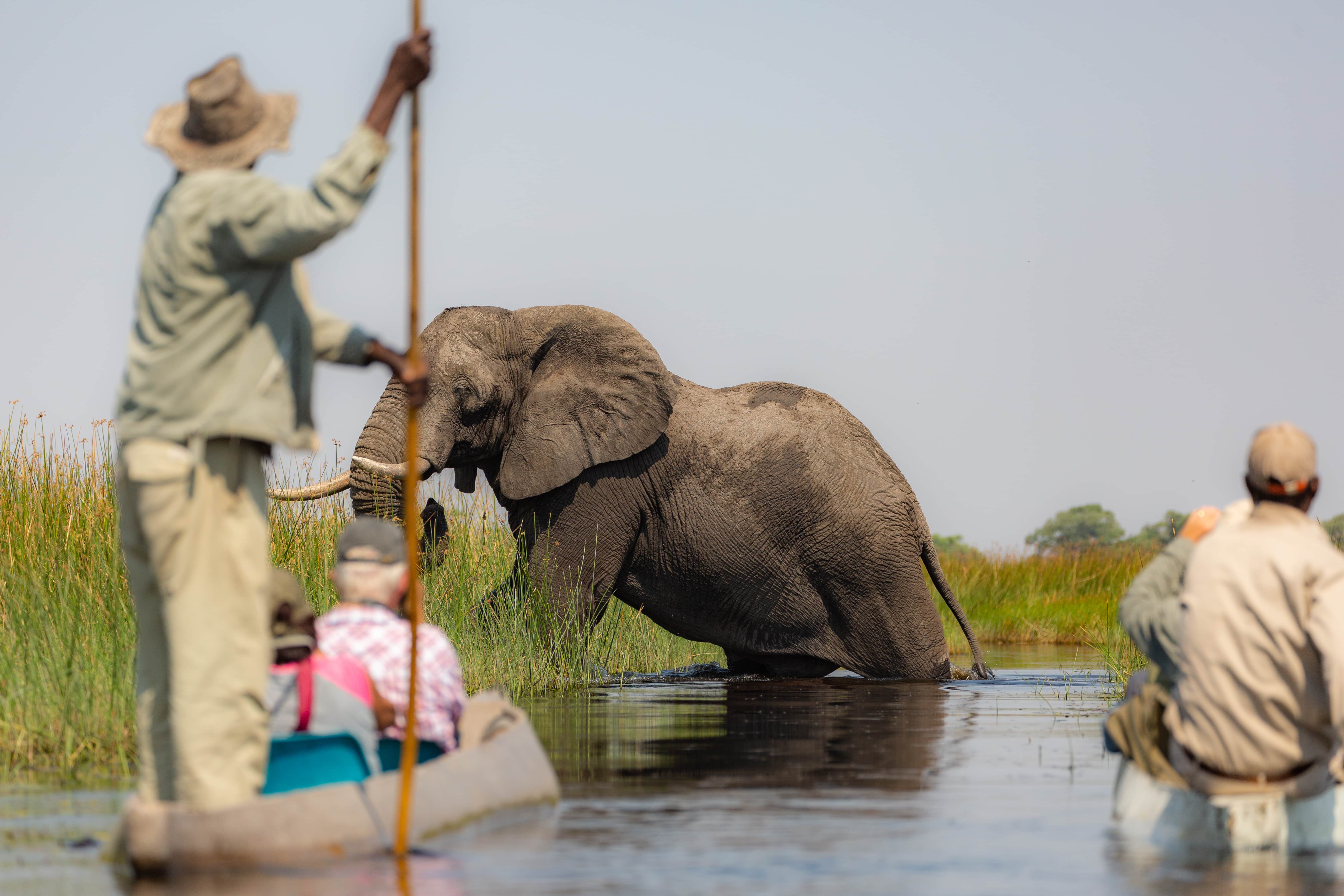
Gliding through the flooded channels of Botswana’s Okavango Delta in a mokoro — a traditional dugout canoe — puts you at eye level with an extraordinary range of plant and animal life, from brightly coloured reed frogs to elephants seen at close quarters. Because the boat makes almost no sound, you can approach resident wildlife gently and photograph it without disturbance.
This is among the most distinctive forms of safari precisely because it takes place on water rather than land. It is an immersive way to move through the delta’s shifting habitats — open clear water, swamps and river floodplains — with hippos, rhinos and other species going about their lives in front of you.
A small-group itinerary covering Moremi and the Okavango Delta offers a good introduction. You head out with a guide who knows the wetlands well and who will bring you as near to the wildlife as is safe.
2. Fly-In Safari
A fly-in safari is built for travellers who want to cover as much ground as possible in a single trip.
Light aircraft link the camps, so you can move between far-flung locations with ease. One day might find you watching desert-adapted elephants in Damaraland; the next, a flock of flamingos on a lagoon along the Skeleton Coast.
Flying also gives you an aerial view of the landscapes you are about to explore on foot. Having seen the animals from above, you can then study them at close range with your guide.
Namibia illustrates the idea well. After taking in the red dunes and rugged desert scenery, you continue to Etosha National Park, known for large concentrations of wildlife including zebra. An optional hot air balloon flight at sunrise drifts over the dunes, with a champagne breakfast waiting where you land. The route also passes over Deadvlei, with its forest of petrified trees.
3. Walking Safari
On foot, the sounds and smells of the bush come to the fore. Accompanied by an experienced guide, you walk through wildlife-rich country and reach places no vehicle can. The smaller details matter more here — an elephant shrew, a buffalo weaver — and you see them from an entirely different angle. You learn to read tracks, observe the behaviour of insects and immerse yourself properly in your surroundings.
South Luangwa National Park is a classic setting for this. A walking itinerary there takes in seven ox-bow lagoons, home to hippo and lion, before continuing through Kapamba, where elephant and buffalo are found.
4. Small Group Safari
Travelling as a couple or on your own, a small group tour lets you join like-minded travellers in visiting the most sought-after wildlife areas, guided by people who know them intimately.
Madagascar is a strong example. A wildlife-focused tour of the island might be led by an expert author on Malagasy natural history. You move between strikingly different habitats — humid rainforest, dry baobab forest and the jagged limestone pinnacle fields known as tsingy — and can expect rare sightings, among them numerous lemurs, unusual birds and a rich variety of reptiles and amphibians.
5. Family-Friendly Safari
A family safari works for every age group. Children can learn about biodiversity from the resident expert while you spend time together somewhere entirely new. Any family trip to Africa also offers the chance to make lasting memories of some of the planet’s most magnificent animals.
The best family safaris are those that let you share in your child’s sense of wonder. The thrill of a first giraffe, or the sound of a lion roaring, is magnified by their excitement.
A self-drive combining Cape Town, the Garden Route and a safari is a good option. Alongside exploring the city and the lush scenery of the Garden Route, it takes in a wildlife-rich reserve. Amakhala Game Reserve covers 7,000 hectares of fine natural country, home to lion, wildebeest, tortoise and more than sixteen species of antelope.
6. Honeymoon Safari
A honeymoon safari is unlike any other trip. Experienced hand in hand with your partner, it becomes a genuine once-in-a-lifetime memory. Few sights match a giraffe walking into the sunset, and you will not find it outside Africa.
Picture waking to birdsong in Kruger National Park, or falling asleep beneath a starry Zambian sky. Places like these lend themselves to intimate moments.
There is plenty of wildlife to see from the air, too. On a hot air balloon safari you may look down on lions playing with their cubs, or even on the Great Migration.
For a honeymoon that balances game viewing with rest, a trip pairing Kenya with Zanzibar works well: exhilarating wildlife followed by powder-white beaches, a stay in a former Zanzibari palace and a game drive in a secluded conservancy.
Choosing the Right Safari for You
Each of these styles suits a different kind of traveller. A mokoro or walking safari rewards those who want to slow down and notice the smaller things. A fly-in itinerary suits anyone keen to see as much as possible in limited time. Small group tours appeal to solo travellers and couples alike, while family and honeymoon safaris shape the same landscapes around very different priorities.
Thinking about which approach fits your plans is the natural first step — the rest follows from there.