Wildlife & Nature · 2 April 2024
10 Tips for Seeing Mountain Gorillas in Uganda
Uganda's Afromontane rainforests are among the most biodiverse habitats in East Africa, and they shelter the country's most celebrated resident: the mountain gorilla. In the 1980s, habitat loss and poaching pushed these
10 Tips for Seeing Mountain Gorillas in Uganda
Uganda’s Afromontane rainforests are among the most biodiverse habitats in East Africa, and they shelter the country’s most celebrated resident: the mountain gorilla. In the 1980s, habitat loss and poaching pushed these animals to the brink of extinction. Concerted government protection since then has turned the story around, and more than 1,063 mountain gorillas now range freely through the rugged forest.
That recovery makes a gorilla safari in Uganda a genuine possibility rather than a distant hope. But where should you go? What should you pack? And how do you make the most of the time you’re granted with a habituated family? The guidance below covers the essentials.
1. Consider the Four-Hour Gorilla Habituation Experience
A habituated family usually contains at least one silverback, along with blackbacks, adult females and infants. The allotted hour with them passes remarkably quickly, so it pays to put the camera aside for part of it and simply watch.
If you want longer in their company, Uganda also offers the Gorilla Habituation Experience. It costs US$800 more than a standard permit, taking the total to US$1,500 — the same price as a one-hour trekking permit in Rwanda — and gives you four hours with the gorillas of Bwindi Impenetrable Forest National Park.
2. Travel During the Dry Season
Uganda’s two dry seasons, from December to March and June to September, are the best periods for gorilla tracking. Rain can fall on as many as 330 days a year, but it is less frequent during these months, and Bwindi Impenetrable National Park is at its most atmospheric, with streams glinting through the trees.
Uganda rewards visitors well beyond its primates. Chimpanzees thrive here, and the birdlife is exceptional — look out for species such as the blue-headed sunbird and black bee-eater.
3. Choose Between Bwindi and Mgahinga
Bwindi Impenetrable National Park
Reached by roughly a two-hour drive along dirt tracks from the nearest airstrips, Bwindi is widely considered Uganda’s finest gorilla-tracking destination and supports about half the world’s mountain gorilla population. The animals spend roughly a quarter of their day feeding on leaves, shoots and stems, supplemented by larvae, snails, ants and salt sources.
Across the border in Rwanda, Volcanoes National Park offers an alternative base for mountain gorillas, along with golden monkeys, forest squirrels and more than 200 bird species.
Mgahinga Gorilla National Park
Set high in the clouds between 2,227m and 4,127m, Mgahinga is another strong option. Treks begin through dense montane forest and extensive bamboo groves. It is remote, peaceful and home to golden monkeys and black-fronted duiker antelopes — a fine place to step away from the modern world.
Gorilla groups here are led by dominant alpha silverbacks, who direct activities such as nesting, feeding and movement between seasonal feeding grounds.
4. Pair Your Trek with Murchison Falls
Murchison Falls National Park has no gorillas, but its Budongo Forest sector holds a healthy chimpanzee population. You can also see African elephants, hippos, Uganda kobs, lions and leopards before continuing to Bwindi for your gorilla trek. The two parks combine well. Lake Mburo National Park and Kibale National Park are also worth considering for wildlife.
5. Carry US Dollars
The local currency is the Ugandan shilling, but US dollars are the preferred hard currency. Make sure any bills you bring were issued in 2013 or later, as older notes attract a poorer exchange rate from guides and other tourism staff.
A standard gorilla permit costs US$800. The four-hour habituation experience in Bwindi costs US$1,500.
6. Plan Well in Advance and Prepare Physically
The terrain in Bwindi and Mgahinga consists of steep, rainforest-covered slopes, so some preparation before you travel is worthwhile. Walking poles make a real difference in dense forest, helping you keep your balance on the trails — which become notably slippery in the wet season.
Building up your hiking fitness beforehand will stand you in good stead. If the climb feels beyond you on the day, a ‘sedan’ chair can be hired for around US$300; this is a stretcher-mounted seat in which you are carried up to the gorillas. Bring a reusable water bottle and drink plenty along the way.
7. Dress Sensibly for the Trek
Footwear matters most: choose boots with a firm grip and ankle support, and avoid new pairs that may cause blisters. A waterproof jacket is wise, since Bwindi and Mgahinga see at least some rain throughout the year. Long-sleeved tops and gaiters help keep insects at bay, and a pair of gardening gloves will protect your hands from the stinging nettles that grow prolifically in gorilla territory.
8. Hire a Porter
Porters carry rucksacks holding water, camera equipment and the layers you shed as the day warms — mornings are crisp and nights can be cold. They will also pull or push you up the steeper sections. The charge is only US$20.
Many porters are former poachers, so hiring them supports gorilla conservation and the wider wildlife of the national parks. They are integral to these experiences.
9. Stay Close to the Gorillas
After a day in the forest, you will want somewhere comfortable to recover.
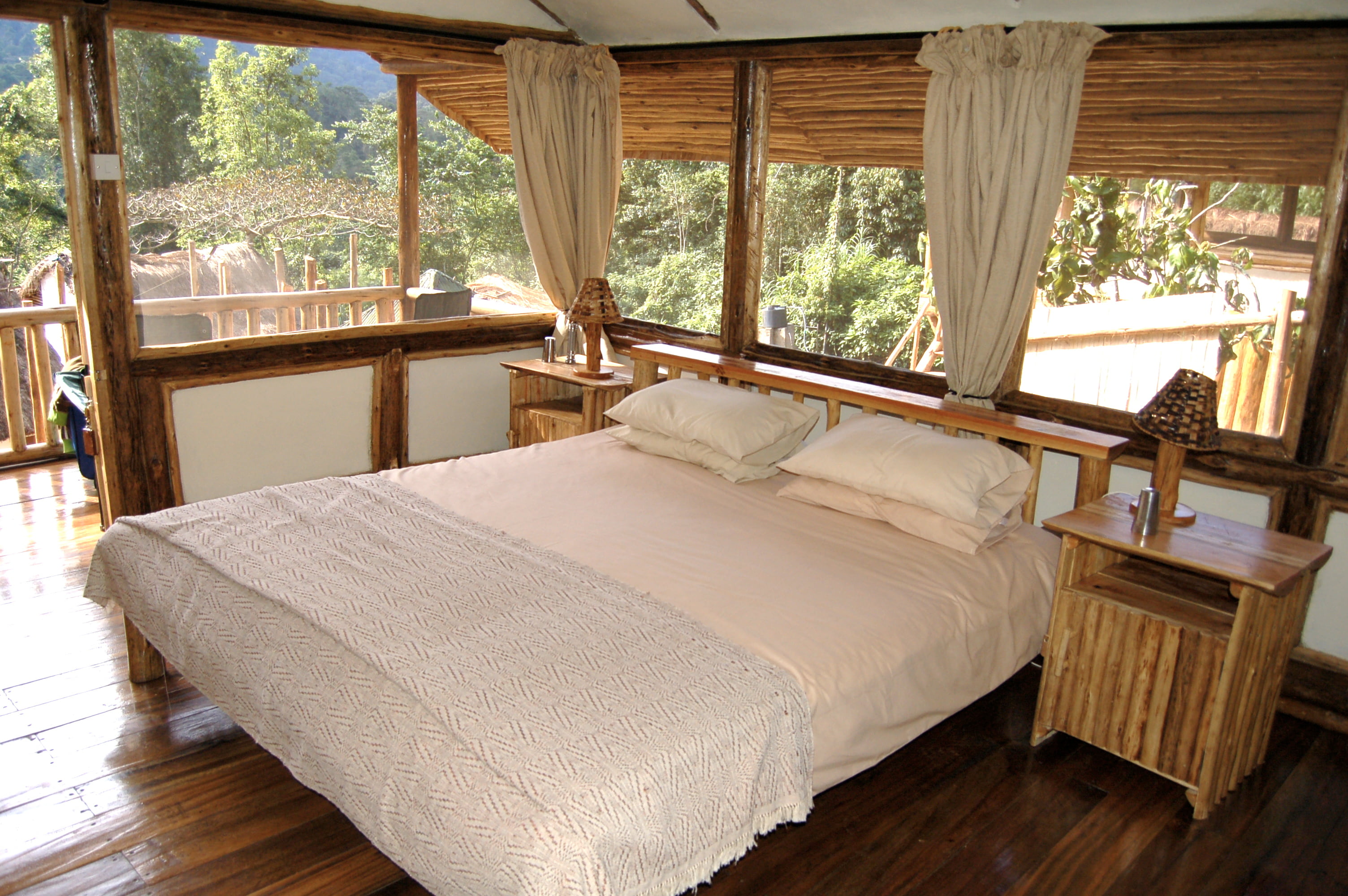
- Buhoma Lodge sits a ten-minute walk from the Buhoma sector entrance in Bwindi and about five minutes from the trekking start point. It takes an environmentally conscious approach, using solar power, locally sourced ingredients and locally employed staff, with elevated views over the rainforest.
- Mahogany Springs Lodge overlooks the Munyaga River Valley just outside Bwindi. Its large stone cottages, built from local materials, have private balconies facing the valley.
- Nkuringo Bwindi Gorilla Lodge, near the Nkuringo sector where the habituation experience takes place, looks out over the distant Virunga peaks on one side and Bwindi’s forested slopes on the other. Hiking and birding for Albertine Rift endemics are possible nearby.
10. Start Planning Early
With only 1,063 mountain gorillas left in the world, time in their company is a rare privilege and a lasting memory. Permits, lodges and guides are limited, so the earlier you begin arranging your trip, the more choice you will have over routes, accommodation and any experiences you wish to add alongside your trek.