Travel Inspiration · 28 August 2026
Top 10 Must-Visit Bucket List Destinations: Natural Wonders to Explore in 2027
If 2027 is the year you finally start ticking off those once-in-a-lifetime trips, Africa and Latin America are two continents that reward the effort. Between them they hold misty cloud forests, sprawling wetlands and wat
10 Natural Wonders to Put on Your Bucket List for 2027
If 2027 is the year you finally start ticking off those once-in-a-lifetime trips, Africa and Latin America are two continents that reward the effort. Between them they hold misty cloud forests, sprawling wetlands and waterfalls powerful enough to soak you from a hundred metres away. Here are ten natural wonders worth planning around.
1. Victoria Falls, Zambia and Zimbabwe
The Zambezi River throws itself over a basalt cliff here, dropping roughly 108 metres into the gorge below. The result is a curtain of water so immense that the spray is visible from miles away. Victoria Falls holds UNESCO World Heritage status and a place among the seven natural wonders of the world.
Visit between April and July for the fullest flow. A helicopter flight gives you the scale of the thing in one sweep, while walking the paths along the chasm brings you close enough to feel the thunder through your feet. Keep an eye out for vervet monkeys, which are common in the area and entirely unbothered by visitors.
2. Iguazú Falls, Argentina and Brazil
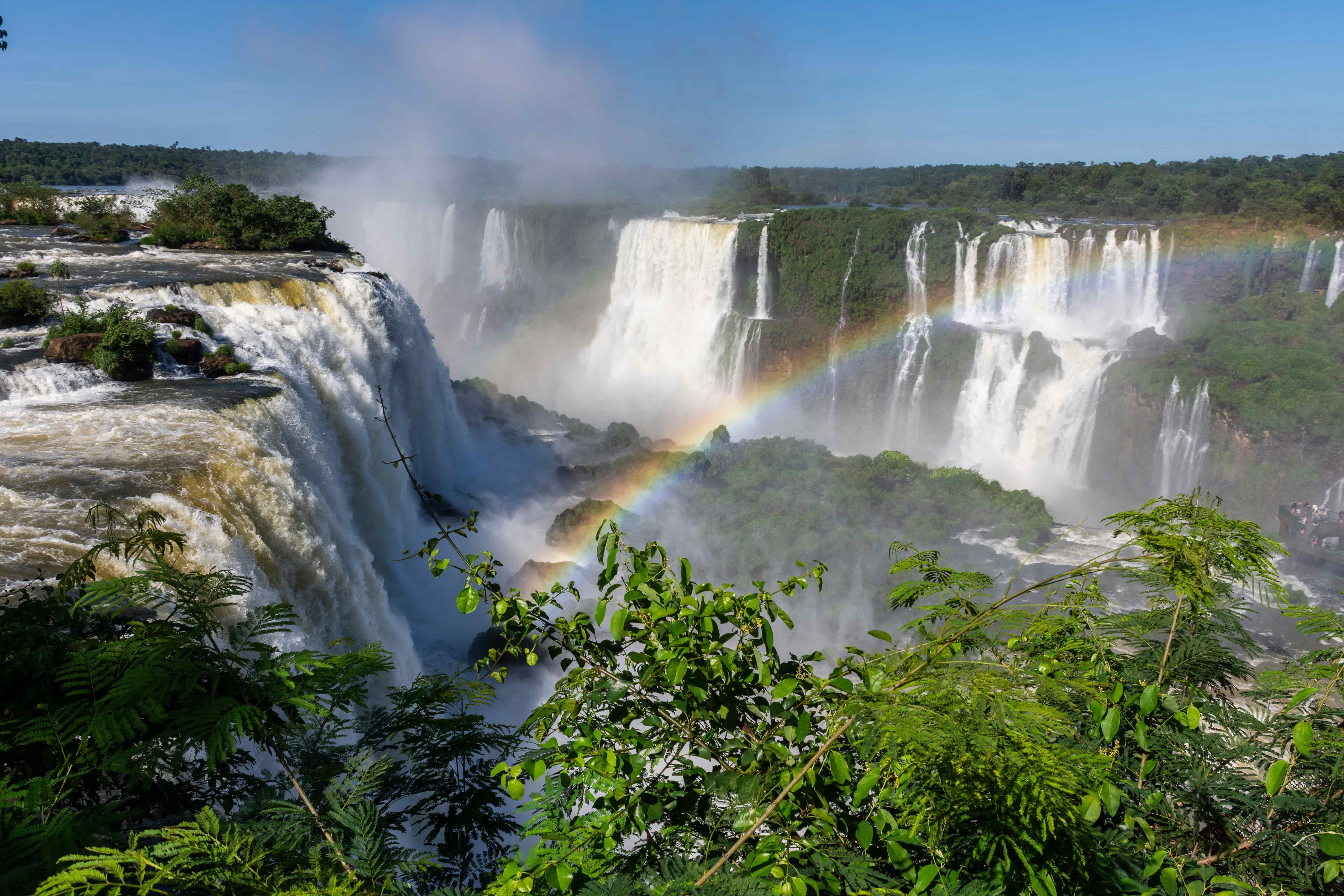
The Iguazú River splits into around 275 individual cascades here, framed by subtropical forest alive with toucans, coatis and butterflies. It is a year-round destination, though heavy flows can throw up rainbows — sometimes two at once.
Boat trips take you close enough to be drenched by the spray, but the standout viewpoint is the boardwalk over Devil’s Throat, where the largest volume of water plunges about 90 metres into a U-shaped chasm.
3. Table Mountain, South Africa
Cape Town’s flat-topped backdrop is one of the most recognisable landmarks in Africa. The city gets sunshine throughout the year, but November to March offers the clearest conditions and the sharpest views from the summit.
Go early in the morning to beat the crowds and the cloud that often gathers by midday. From the top, the city, Table Bay and the surrounding peaks unfold in every direction. It suits couples, families and solo travellers equally well, and pairs neatly with an evening drink at one of the waterfront rooftop bars afterwards.
4. Pantanal Wetlands, Brazil
The world’s largest tropical wetland spreads across Brazil, and its open terrain and sparse tree cover make it unusually good for spotting wildlife. Jaguars live here, hunting caiman along the riverbanks with a powerful bite and a surprising turn of speed in the water.
The dry season from June onwards brings the clearest conditions for exploring rivers, caves and flooded plains. The biodiversity is extraordinary: roughly 2,000 plant species, 580 birds, 271 fish, 174 mammals and 57 amphibians have been recorded. Look out for the hyacinth macaw, the largest parrot in the world, while paddling a canoe along the waterways.
5. Okavango Delta, Botswana
This inland delta is one of the finest wildlife sanctuaries on the planet. From May to September, floodwaters arriving from Angola fill the dry channels, shrinking the islands and concentrating animals on dry land.
A mokoro — a traditional dugout canoe — is the best way to move through the quiet channels and lily fields. The delta is a UNESCO World Heritage Site and supports abundant water birds, frogs and other small creatures among the papyrus, plus elephants, buffalo, hippos and the occasional crocodile.
6. Salar de Uyuni, Bolivia
The world’s largest salt flat stretches across roughly 12,000 square kilometres of Bolivia. In the wet season, from December to April, a thin layer of water turns the surface into a vast mirror. From May to November, the dry crust allows for the perspective-bending photographs the flats are famous for.
High elevation and minimal light pollution make this one of the best places on earth for stargazing. With nothing but salt for miles, the night sky puts on a show that is hard to match anywhere else.
7. Ngorongoro Crater, Tanzania
This unflooded volcanic caldera in Tanzania holds an estimated 25,000 animals. Descend to the floor and you will find large herds of zebra and wildebeest, along with lion and hyena, while the swamps and grasslands draw birds in numbers.
June to November brings drier conditions and easier wildlife watching, though the crater rewards visitors year-round, with greener landscapes between November and May. Leopards are sometimes seen in Lerai Forest, either draped along a branch or out on the crater rim. A full day of game viewing can be rounded off with a sundowner as the light fades.
8. Torres del Paine National Park, Chile
Chilean Patagonia’s best-known national park offers snow-capped peaks, fast rivers, blue lakes and emerald forest. Late October to April brings milder temperatures suited to walking, whether you fancy a full-day hike up craggy slopes or a gentler scenic drive through the park’s highlights.
Wildlife ranges from large herds of guanacos to their main predator, the puma. Hikers of different fitness levels will find trails to match, and the Hunter’s Trail is a good bet for spotting guanacos — and, with luck, a puma.
9. The Great Migration, Tanzania and Kenya
Each year, more than two million wildebeest, zebra and gazelle move across the plains of the Serengeti and the Masai Mara, with lion and leopard following in their wake. It is a natural phenomenon that plays out on a scale few others match.
July and August are the months to aim for, when the herds cross into the Masai Mara. Once the first rains arrive, they move on in search of fresh grazing. The river crossings, where animals leap into crocodile-infested water, are the most dramatic moments. A hot air balloon flight over the Mara offers a quieter, wider view of the whole spectacle.
10. Arenal Volcano, Costa Rica
Arenal is a striking cone that often wears a cap of cloud. November to May is the dry season, bringing less rain and clearer skies for hiking and wildlife watching.
Inside the national park, guided walks through the tropical forest explain the volcano’s history and geology. For a different angle, ride the gondola to the top and zip-line back down across seven cables strung high above the canopy. Afterwards, the nearby hot springs — fed by the volcano’s underground water system — are a fine way to ease tired legs.
Planning Your 2027 Trip
Whether you are drawn to African plains or South American salt flats, these ten destinations all reward a little forward planning. Think about the seasons that suit you best, then build an itinerary around the wildlife, landscapes and experiences that matter most.