Wildlife & Nature · 1 April 2020
Top 5 First Time Safari Destinations
An African safari sits near the top of many travellers' wish lists, and the continent offers an extraordinary range of countries to choose from — each with its own wildlife, cultures and landscapes. That abundance is als
Top 5 First-Time Safari Destinations
An African safari sits near the top of many travellers’ wish lists, and the continent offers an extraordinary range of countries to choose from — each with its own wildlife, cultures and landscapes. That abundance is also the challenge: with so many possibilities, planning a first safari can feel daunting.
The starting point is working out what you actually want from the trip. Which animals matter most to you? Would you rather travel by 4x4, on foot or on horseback? How long can you spare? And do you want other activities alongside the game viewing?
Once those questions are answered, the shortlist narrows quickly. Five countries stand out as especially well suited to a first safari:
- South Africa
- Kenya
- Tanzania
- Zambia
- Botswana
South Africa
Why it works for a first safari
South Africa has the most developed safari industry on the continent. Accommodation is of a high standard, the infrastructure is strong, operators are reputable and experienced, and prices are reasonable. Wildlife is remarkably varied: the Big Five — lion, leopard, elephant, rhino and buffalo — can realistically all be seen within a single trip, while the coastline offers the marine Big Five of whale, penguin, shark, seal and dolphin. Add wine tours, Table Mountain and the Garden Route, and it becomes clear why visitors return. It is also the only malaria-free safari destination, which makes it a strong choice for families.
Where to go
Kruger National Park and KwaZulu-Natal for safaris and land mammals. The Western Cape and the Garden Route for marine life and shark cage diving, if you are feeling brave.
What you might see
Lion, leopard, elephant, buffalo and rhino, plus birdlife, zebra, giraffe, wild dog, cheetah, hyena, whale, penguin, shark, seal and dolphin.
How you travel
Safaris here are typically conducted in a 4x4 vehicle.
When to go
The climate is pleasant all year, but May to September in Kruger is notably dry. Animals gather in large numbers at waterholes, which improves your chances of ticking off every species on your list.
How long to allow
Eight to twelve days suits a first visit and leaves room to explore properly. Allow at least three days in Kruger and six days for the Garden Route without rushing. A few nights in Cape Town is a good way to experience South African city life.
What to keep in mind
South Africa has a reputation for crime, particularly in Johannesburg, though most visitors encounter no problems. Sticking to national parks and private reserves keeps the risk very low.
Kenya
Why it works for a first safari
Kenya has a long history as a safari destination and a well-developed tourism industry. Infrastructure is good, the country and its parks are easy to reach, and service and accommodation standards are consistently high. The plains of the Masai Mara support spectacular wildlife and fascinating cultures, and the Great Wildebeest Migration culminates here. Conservation work since the severe poaching crisis of the 1970s and 1980s has produced high game concentrations, so sightings in strong numbers are likely. There is also a long, beautiful coastline and rewarding hiking in the Great Rift Valley.
Where to go
For safaris and game viewing: the Masai Mara, plus Samburu and Shaba National Parks, both home to award-winning lodges. For beaches: Mombasa, Malindi and Lamu, with Watamu Beach and Diani Beach particularly recommended. For hiking and scenery: the Great Rift Valley.
What you might see
Lion, leopard, elephant, rhino, buffalo, cheetah, hyena, jackal, bat-eared fox, giraffe, zebra, warthog, hartebeest, gazelle and impala.
How you travel
Most safaris use 4x4 vehicles, though horseback safaris are available in Amboseli and the Chyulu Hills. The Chyulu Hills option suits families and beginner riders better.
When to go
The Masai Mara offers good game viewing year-round, and temperatures in Kenya are fairly consistent. The long rains fall from March to May. High season runs from September to January on the coast and July to November in the parks. The annual wildebeest migration arrives between August and October.
How long to allow
Eight to fourteen days, depending on time and budget. There is easily enough to fill a fortnight, especially if you want to finish with a few days on one of the country’s beaches.
What to keep in mind
High season brings crowds and higher prices. Kenya has taken a mass-market approach to tourism, which can make parks busy, though private reserves offer an escape from the crowds at a higher cost. Several vaccinations are recommended before travel, and malaria precautions are essential.
Tanzania
Why it works for a first safari
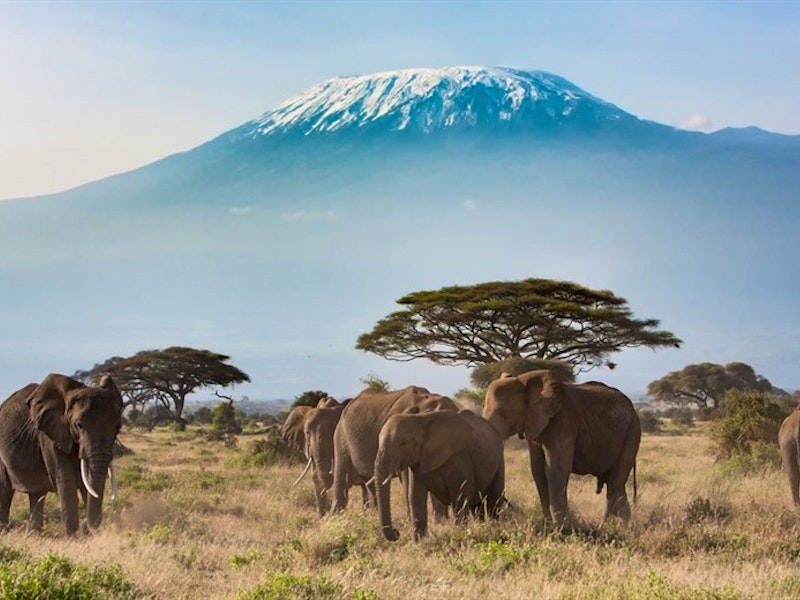
Tanzania is home to some of Africa’s finest national parks, with dense concentrations of game and views of the iconic Mount Kilimanjaro. Several excellent parks sit off the beaten track, where visitor numbers are lower and wildlife encounters feel more exclusive, and there are ample opportunities to engage with local cultures. The Great Wildebeest Migration sends 1.7 million animals thundering across the Serengeti plains towards Kenya — an experience not to be missed. Zanzibar is a short hop away, making it easy to pair a safari with a beach stay. Safaris here are intense and exhilarating, and a few days on a palm-fringed beach afterwards is a fine way to unwind before returning to everyday life.
Where to go
For a first safari, the Northern Circuit is the obvious choice, taking in Serengeti National Park, the Ngorongoro Crater and Kilimanjaro. A boat or light aircraft connects you to Zanzibar for post-safari relaxation.
What you might see
Wildebeest in astonishing numbers, along with zebra, hippo, buffalo, giraffe, antelope, lion, cheetah, leopard and gazelle.
How you travel
Safaris are typically conducted in 4x4 vehicles.
When to go
Tanzania can be visited year-round. The long rains fall in April and May, with short rains in November. The best time for game viewing varies by area, but June to October is the most popular window. The Great Migration is best seen between December and July.
How long to allow
Eight to twelve days, or up to fourteen if you want to add a Zanzibar beach break.
What to keep in mind
Options outside a 4x4 safari are very limited, so there is less variety than in destinations offering boat, walking and horseback safaris.
Zambia
Why it works for a first safari
Zambian safaris place a strong emphasis on adventurous activities such as walking between camps, which suits more active travellers. The country is known for its excellent walking safaris and is a superb choice for anyone wanting to explore on foot. Guides have a reputation for being passionate, enthusiastic, friendly and highly knowledgeable. Accommodation tends to be small and family-run, giving a Zambian safari an authentic, intimate feel. The industry is reasonably well developed, and camps and lodges are comfortable and well priced. Victoria Falls, one of the seven natural wonders of the world, is also within reach.
Where to go
South Luangwa National Park is unrivalled for walking safaris, with the option of travelling between camps on foot. Lower Zambezi National Park is another excellent spot for wildlife.
What you might see
Leopard, lion, wild dog, elephant, buffalo, cheetah, giraffe, hippo and hyena.
How you travel
4x4 vehicle safaris, walking safaris, and boat or canoe safaris along the Zambezi river.
When to go
May to October brings warm, sunny days and chilly nights, excellent game viewing and the walking safari season. November to April is the wet season, when rains can make remote areas hard to reach and some camps close. All-weather camps stay open, however, and the park turns into verdant woodland at this time.
How long to allow
Nine to twelve days, closer to twelve if you plan to travel between camps on foot.
What to keep in mind
A Zambian safari can feel too adventurous or intense for some, particularly first-timers — many people wait until their second or third safari to visit. Some parks and accommodation close during the wet months.
Botswana
Why it works for a first safari
Botswana is exceptionally beautiful at any time of year, from the vast wetlands of the Okavango Delta to the baobab-dotted, golden Kalahari desert. In the rainy season the landscape erupts into vibrant greens and wildlife gathers to feed on fresh vegetation. Safaris here are intimate: the country favours high-income, low-impact tourism, so while you may pay more, you are rewarded with high-quality animal encounters and personal attention. Your chances of bumping into other tourists are minimal.
Where to go
Chobe National Park and Moremi Game Reserve for year-round game viewing; the Okavango Delta in the dry season; the Kalahari Game Reserve in the green season.
What you might see
Lion, leopard, elephant, rhino, buffalo, giraffe, antelope, zebra, hippo, puku and wildebeest.
How you travel
Boat and canoe safaris are available on the Okavango Delta, while walking safaris, night safaris and 4x4 safaris operate across the parks and reserves.
When to go
Botswana can be visited year-round. July to October is the dry season and the best time to see large herds gathering at waterholes. December to March is the green season, a particularly beautiful time of year and the best period for birdwatching. Rain is possible during these months, but prices are generally lower and game viewing remains good, especially in the Kalahari, where game migrates south in search of water.
How long to allow
Eight to twelve days, depending on how many parks and reserves you want to cover.
What to keep in mind
Botswana has a reputation as Africa’s most expensive safari destination. Travelling in the green season can bring prices down considerably.
What to pack
- Casual, comfortable clothing — loose-fitting styles are best for keeping cool
- Cotton rather than synthetic fabrics, particularly during the hot, dry summer months
- Safari trousers, ideally with zip-off knees
- A fleece or warm jacket for evenings and early-morning game drives
- Binoculars for watching wildlife at a distance
- A camera or smartphone with a reasonable zoom
- Mosquito repellent
- Sunscreen
- A wide-brimmed hat
- Sturdy but breathable shoes
- Any prescription medication, plus glasses or sunglasses
- A swimsuit
- A light raincoat if you are travelling during the rains